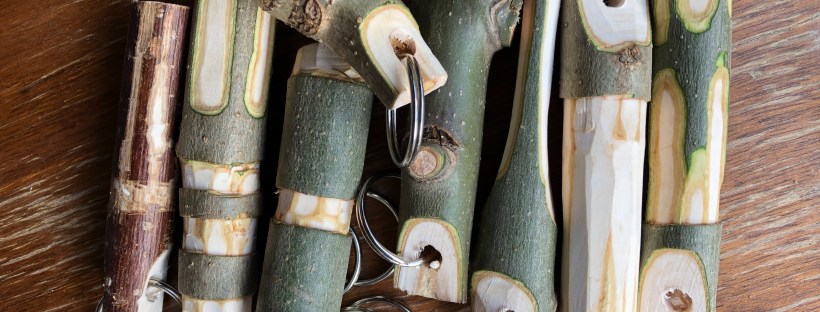
Project Inspiration: How To Make Wooden Key Rings

As our global pandemic continues, we are sending our best wishes and positive energy your way. We hope you are well and that your spirits are high. Something that might help is reading this article from the Centre for Disease Control which supports how important it is to keep doing what we do in these crazy times!

Now, on with the post. This project is great for developing knife skills beyond the pointy stick. By using stop cuts and concave cuts, it is an excellent next step for those students motivated to take their whittling skills to the next level. If you haven’t used knives with students before, head to our Knife Basics page. Make sure your knives are sharp and your wood is fresh, and let’s go!

A note on COVID19
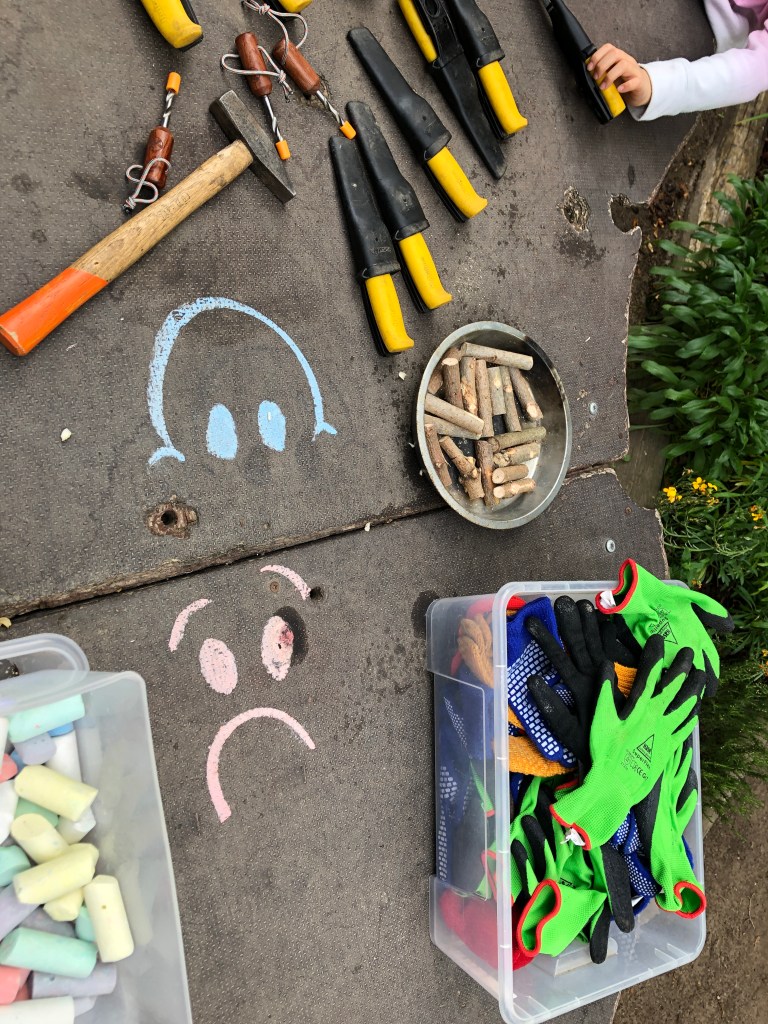
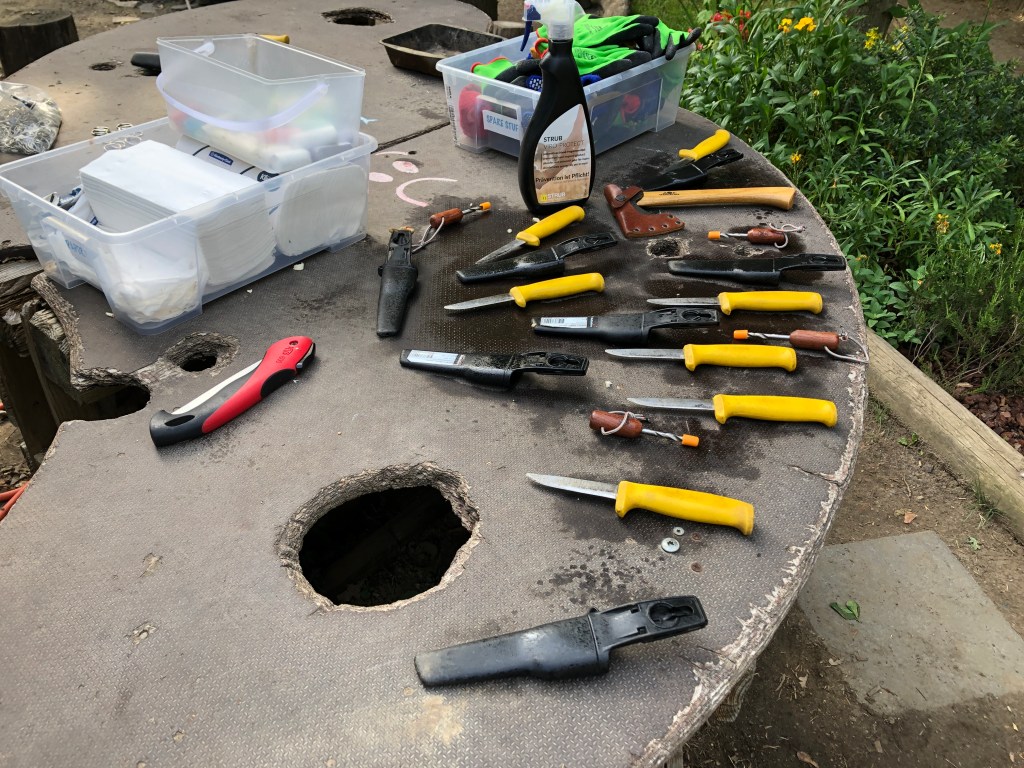
We made this project near the end of our last school year. Only just back in school after our COVID19 lockdown, we were looking for hands on projects to balance the amount of time spent on screens during our Home Learning programme. Our system for tools was anything that had been used ended up on the “unhappy” side of the table where it was disinfected and moved to the “happy” side. Any tools on the “happy” side were fair game.

Step 1) Gather Materials
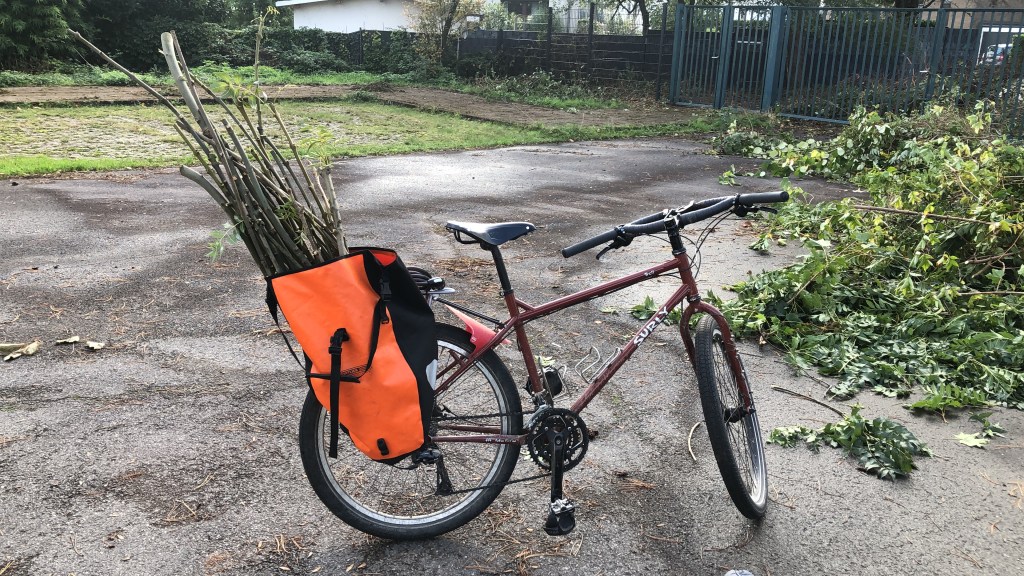
As with our post on How to Make Wooden Spinners, the wood for this can be anything that you have lying around. We used bits of hazel and also the thicker branches that we had leftover from our Christmas tree haul. Diameters of 1.5cm up to 2.5cm are good. Too thin and the project can crack during the drilling process. Too thick and your keyring can get a little bit too chunky to be fit for purpose. As always, the fresher your wood, the easier it will be to carve. Avoiding harder woods, such as oak, will also set your students up for carving success.

Step 2) Measure and Cut
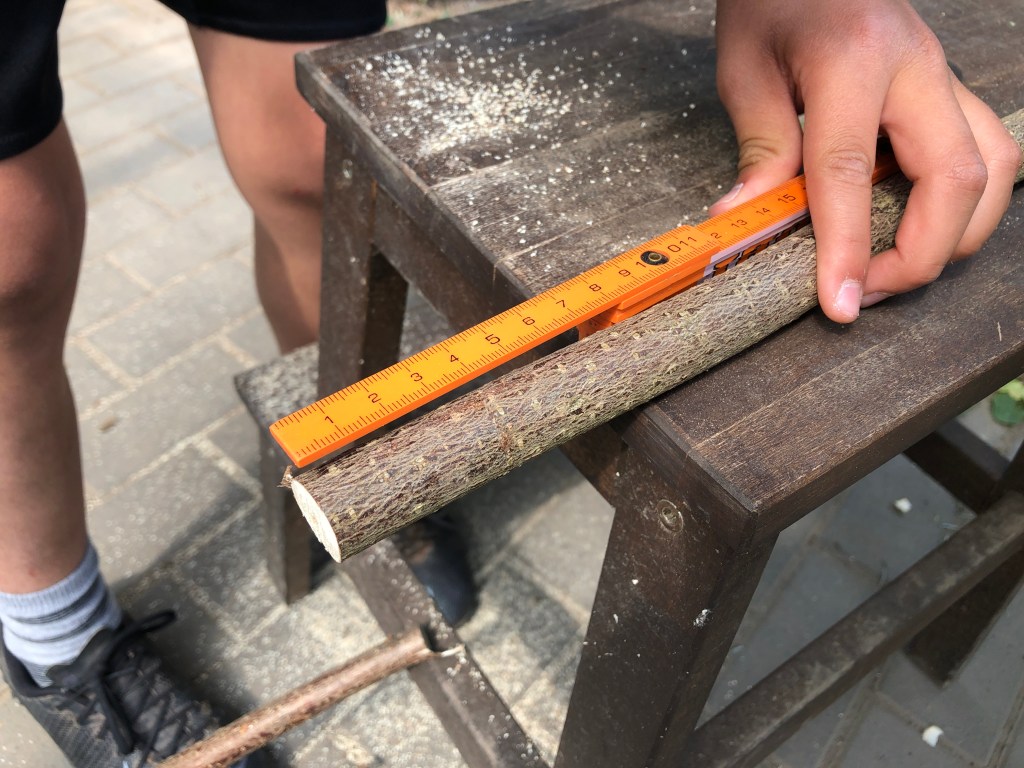
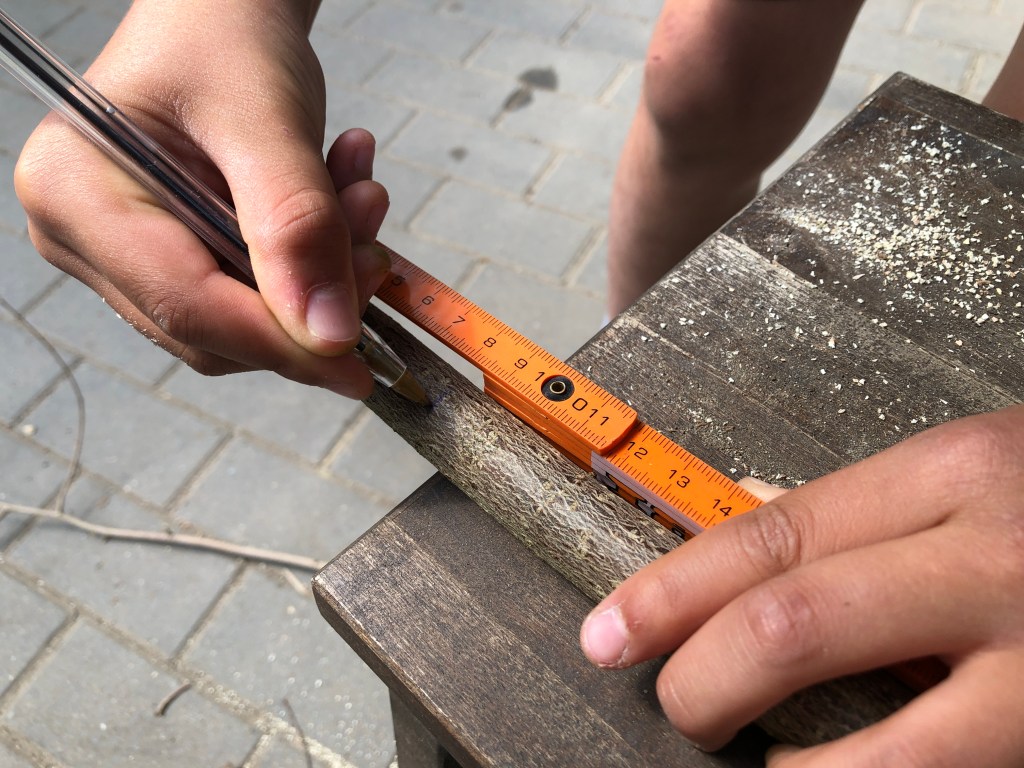
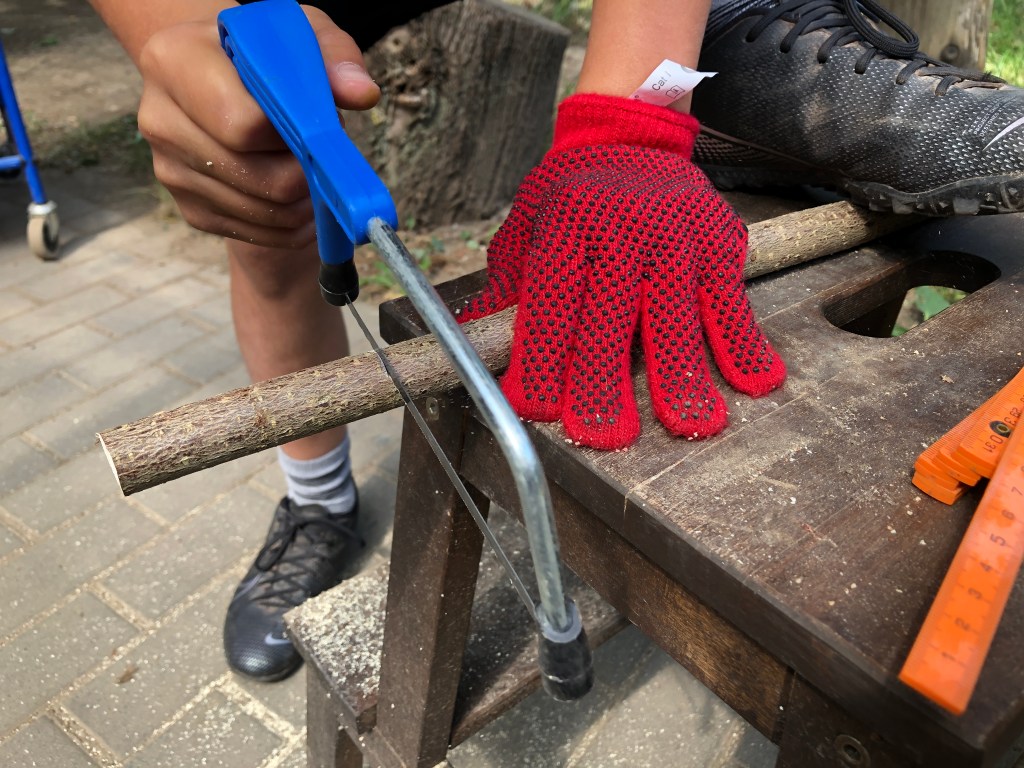
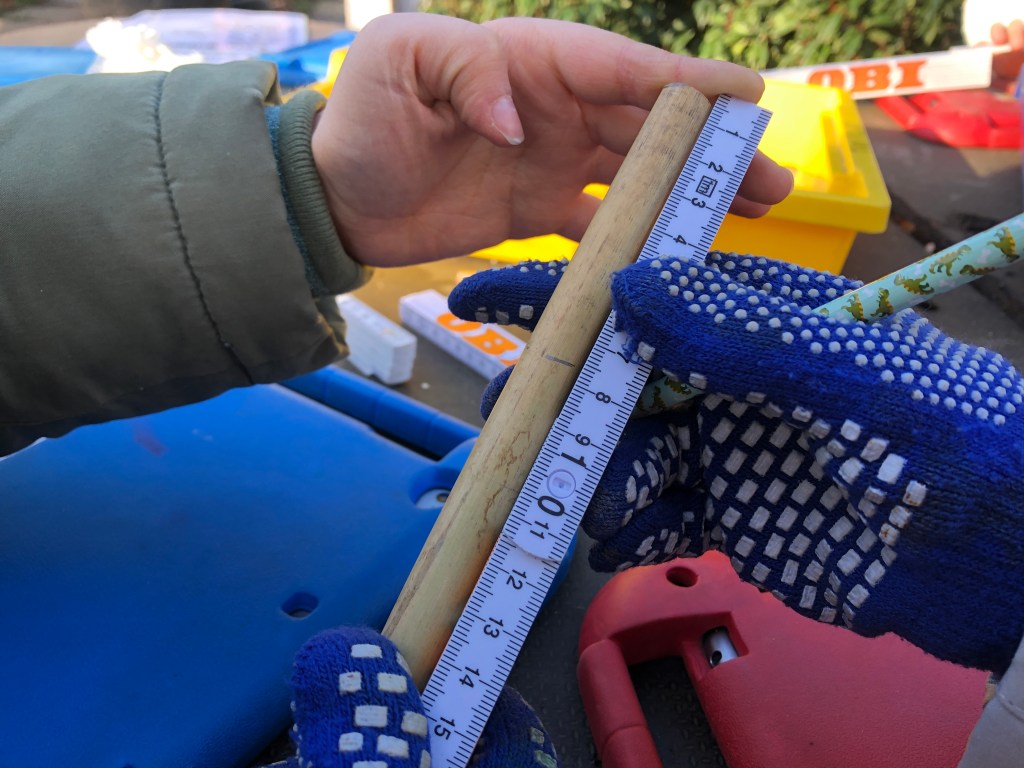
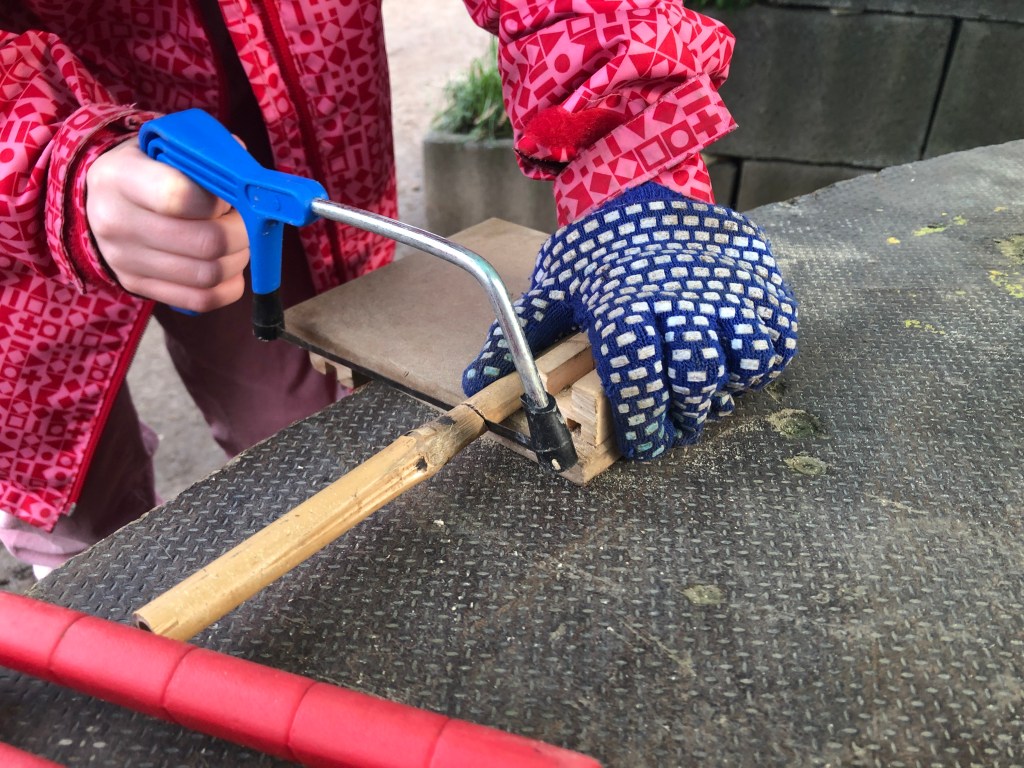
Get those measuring sticks out. We went with 8cm in length. In actual fact, the measuring process is not really necessary, but any opportunity to get our students using their measuring skills in an authentic context is a win. “Measure twice, cut once” and then hacksaws at the ready. If your students haven’t had much sawing experience, put yourself in a position to assist or give them some time to practise.

Top sawing tips: Glove on the “helping hand” and maintain those space bubbles.

Step 3) Carve one end flat
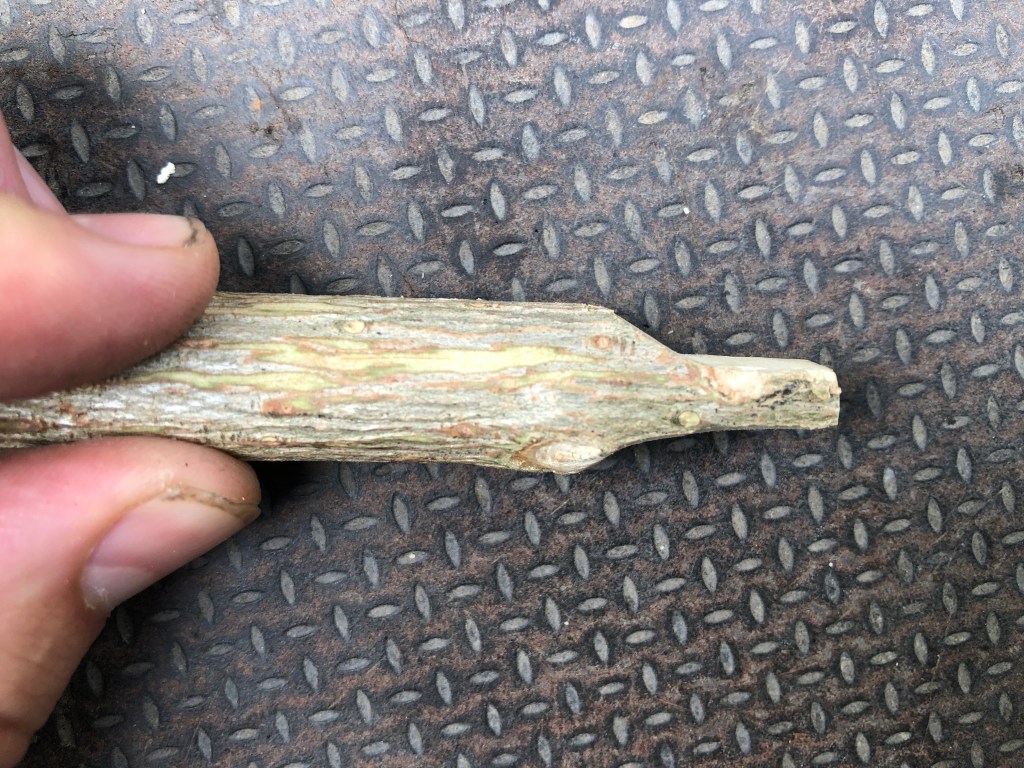
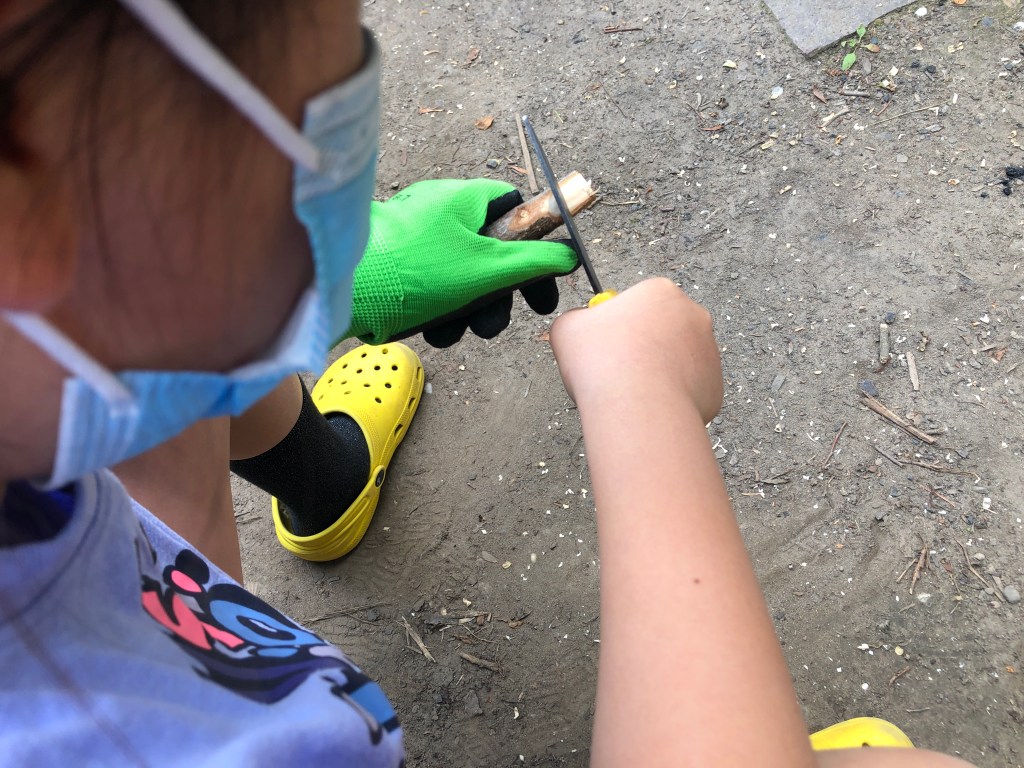
This step involves using concave cuts to create a flat surface on one end of your stick using a sheath knife. Concave cuts, according to Richard Irvine in his awesome whittling book Forest Craft (affiliate link), requires changing the angle of the blade as it moves through the wood. We find it useful for our students to connect this action to that of accelerating on a motorbike (insert sound effects as appropriate).

Step 4) Drill the hole
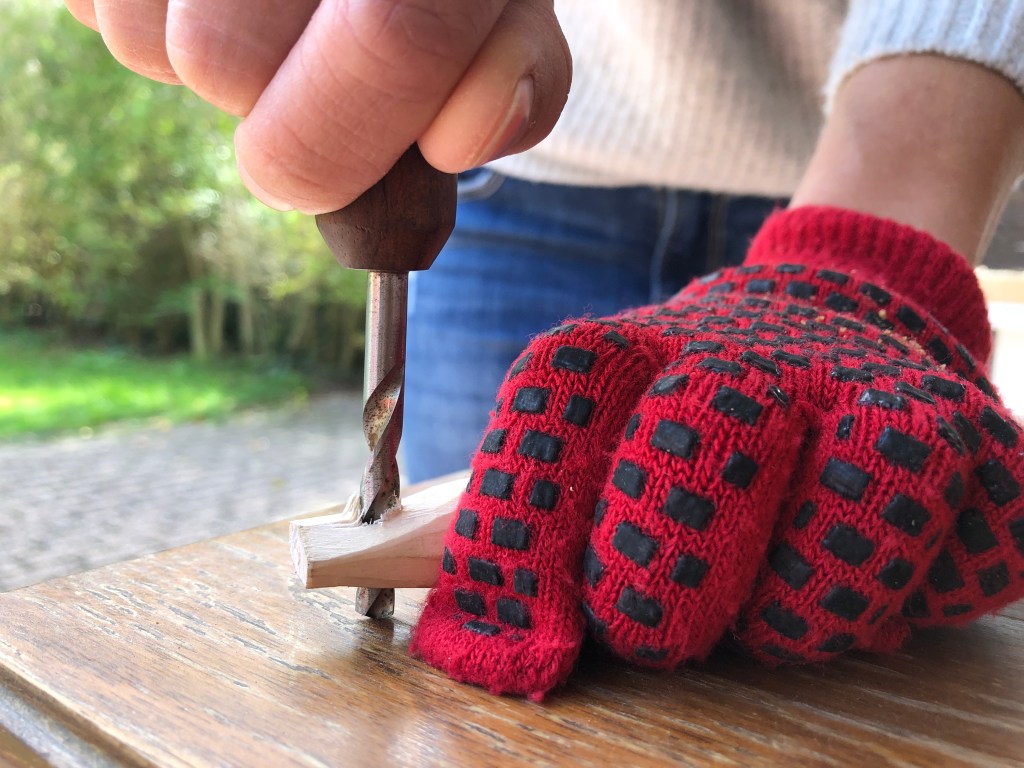
Our hand drills have 5mm bits, but you can play around with different sizes that you have. A round file can be useful for making small holes bigger if you think you need to. Aim to get your hole as central as possible and be careful not drill too close to the top of your stick, as this may cause the project to crack.

Top drilling tips: Glove on the “helping hand” and find a table or surface to drill onto. Avoid pushing the drill towards you hand.

Step 5) Decorate
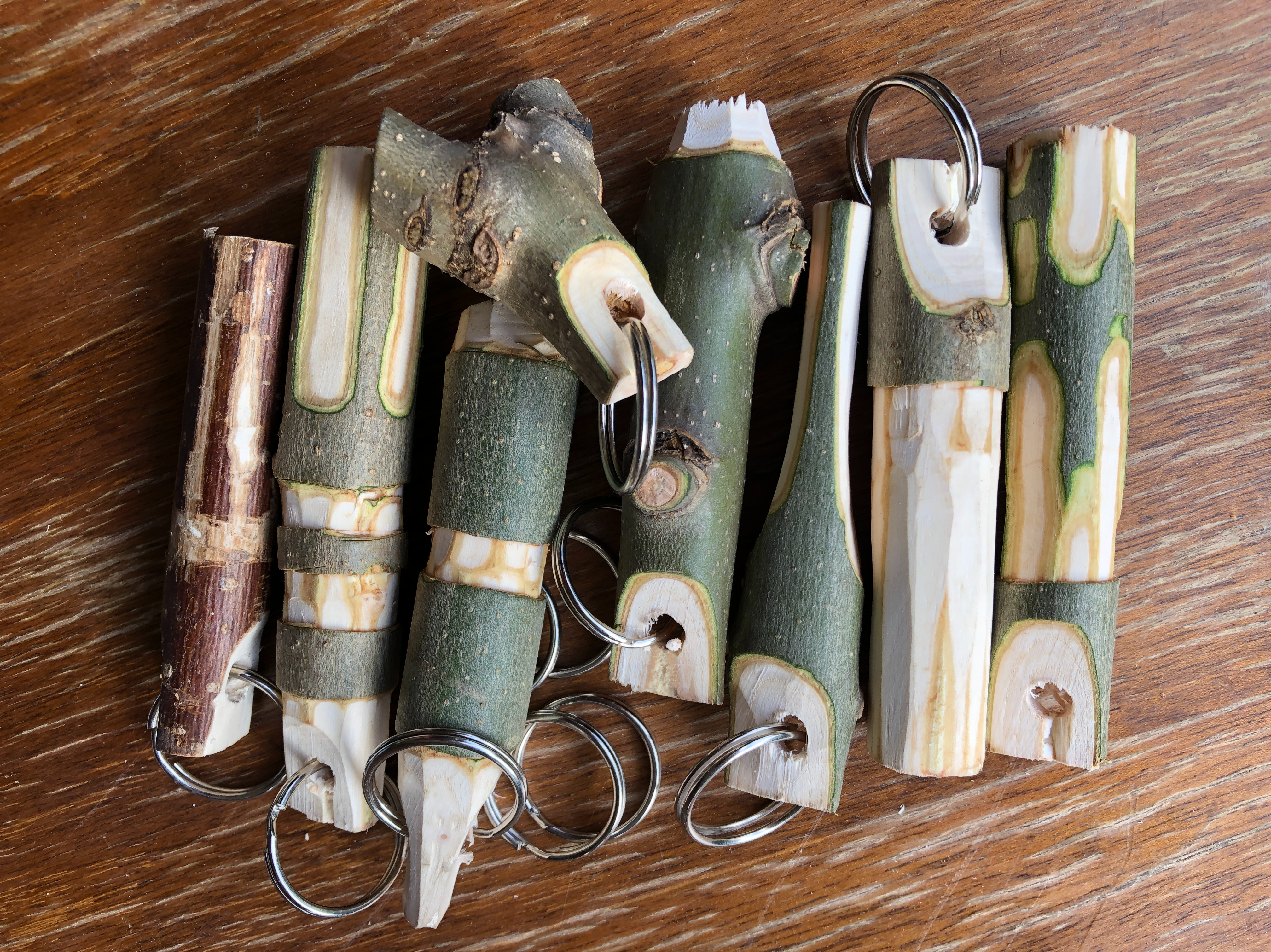
Once the hole is drilled, it’s time to decorate. Whether you want remove all of your bark or create patterns using stop cuts, the world is your oyster. A stop cut involves creating a line or cut which is perpendicular to the direction that you are carving. Do this by turning the stick 90 degrees then pushing and rolling it along the blade of the knife. When you rotate back and carve towards the line, your blade should stop at the line and give you a nice clean finish. This is the theory. It can take a bit of practise to get the stop cut deep enough and there will be times when the blade does not stop. When this happens with students, encourage them to incorporate the “mistake” and alter their design.

When we made this project, some students really took their time on the detail while others carved all of the bark off in minutes and then proceeded to make another keyring for their sibling, and then mother, father, grandma and cat.

Top tip: Drill holes before decorating. Sometimes, the stick can split during the drilling process and it’s pretty soul destroying if you’ve already decorated and then you need to start over!

Step 6) Add the ring
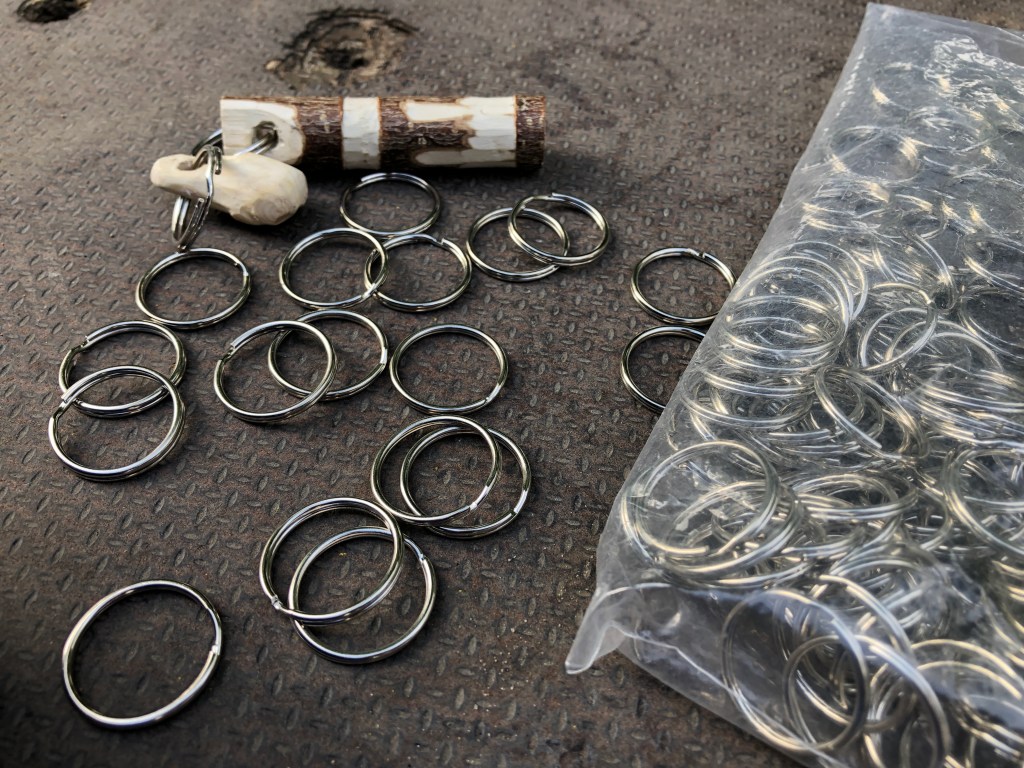
The final step is to thread your creation onto the metal ring. Depending on the dexterity and fine motor control of your students, you might need to assist with this. The minute you find a student who can do this independently, make them your expert and then pop the kettle on.


So there you have it, the third post in our Project Inspiration series. Stay safe, stay healthy and start creating.
If We Chop Down This Tree, Will We Kill Our Librarian? Authentic Opportunities For Taking Measurement Outdoors

I think I can count on one hand the number of times that, as an adult, I have needed to measure a shape that is printed on a piece of paper. Research tells us that authentic learning experiences are the way forward. It suggests that enabling learners to put their skills and knowledge to practical use in a situation where the outcome has a tangible relevance to their own lives, results in far greater retention of knowledge. It’s time to get authentic with measurement. Don’t panic! The great news is that out of all of the ways to learn mathematical concepts in an outdoor environment, measurement is one of the easiest places to start. Here are six ways, which can be adapted to suit your setting, for taking measurement outdoors in an authentic way. 

Pose a Problem

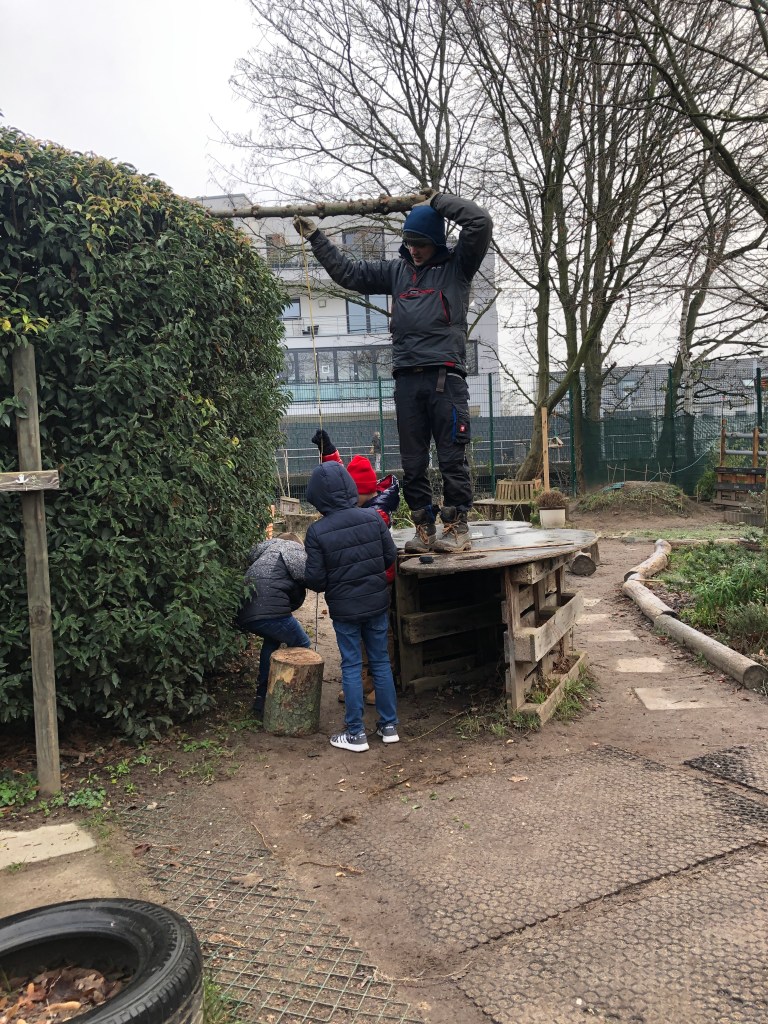
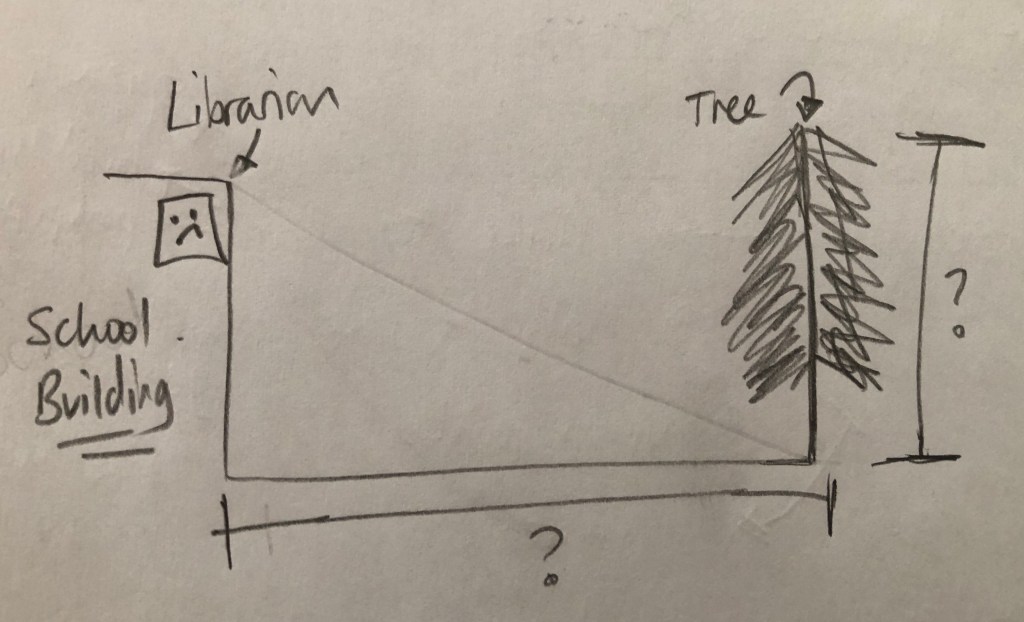
If we chop down this tree, will we kill our librarian? What do we need to calculate to make sure that Mr Crouch will be ok? Hopefully, the students will figure out that they need to measure the height of the tree and also the distance between the school building and the base of the tree. You can then use “10 ways to measure a tree” from OutdoorClassroomDay.org.uk to help you calculate your librarian’s life expectancy. With older students, and if you really want to really get into it, you could bring in some trigonometry and have the conversation about how the top of the school building is further away than the base because the hypotenuse of the triangle is longer than its base… blah, blah, maths, maths.

No librarians were harmed in the writing of this blog.

Make Stuff

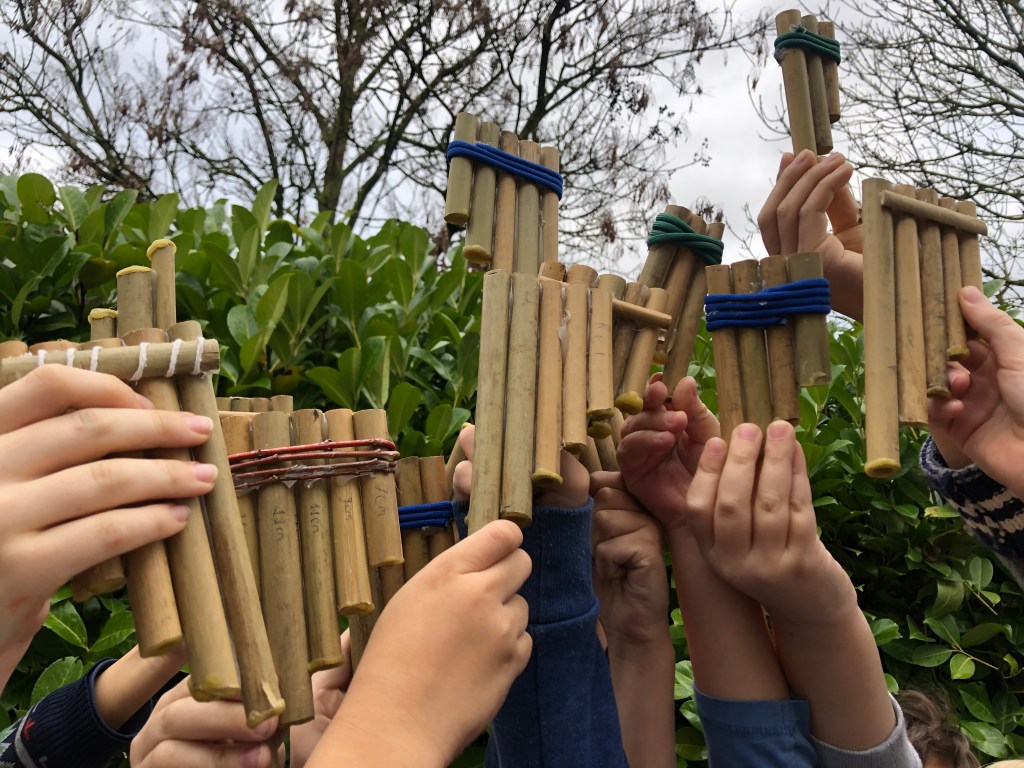
Not many things give students more motivation to improve their measuring accuracy than having a hands-on project to work on. From bamboo panpipes and birdhouses to wooden spinners and raised beds. It doesn’t really matter what you create as long as you prepare yourself to make the most of the activity through the lens of measurement. Using the phrase “measure twice, cut once” is useful when encouraging students to focus on their accuracy.

Find a Purpose

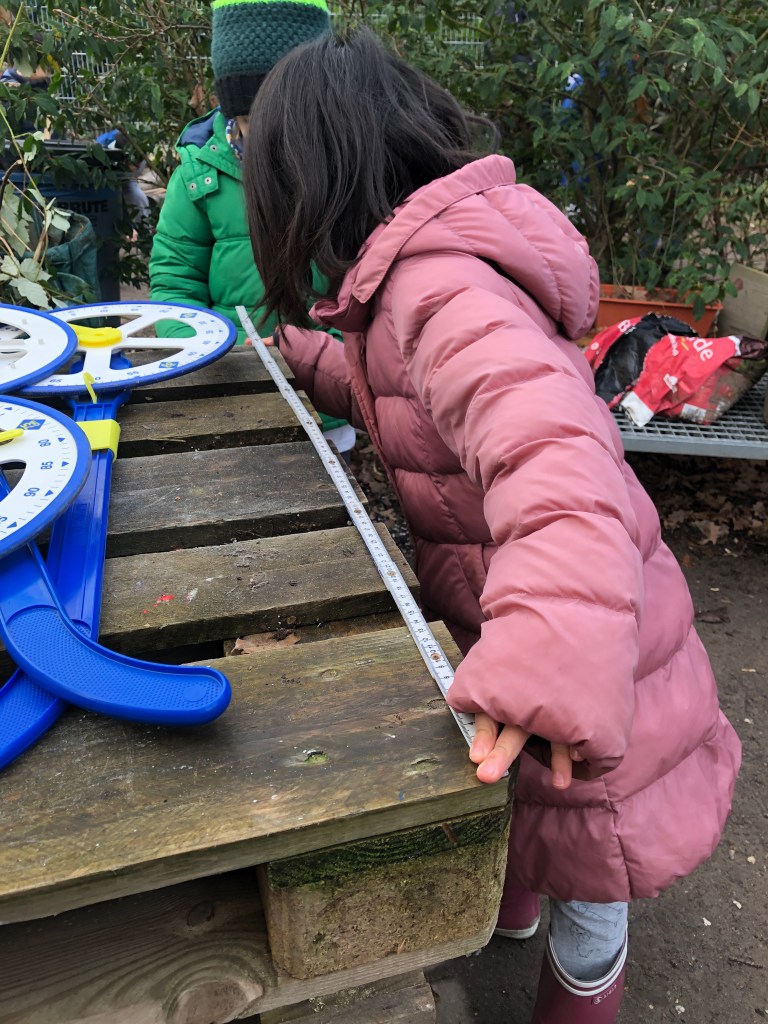
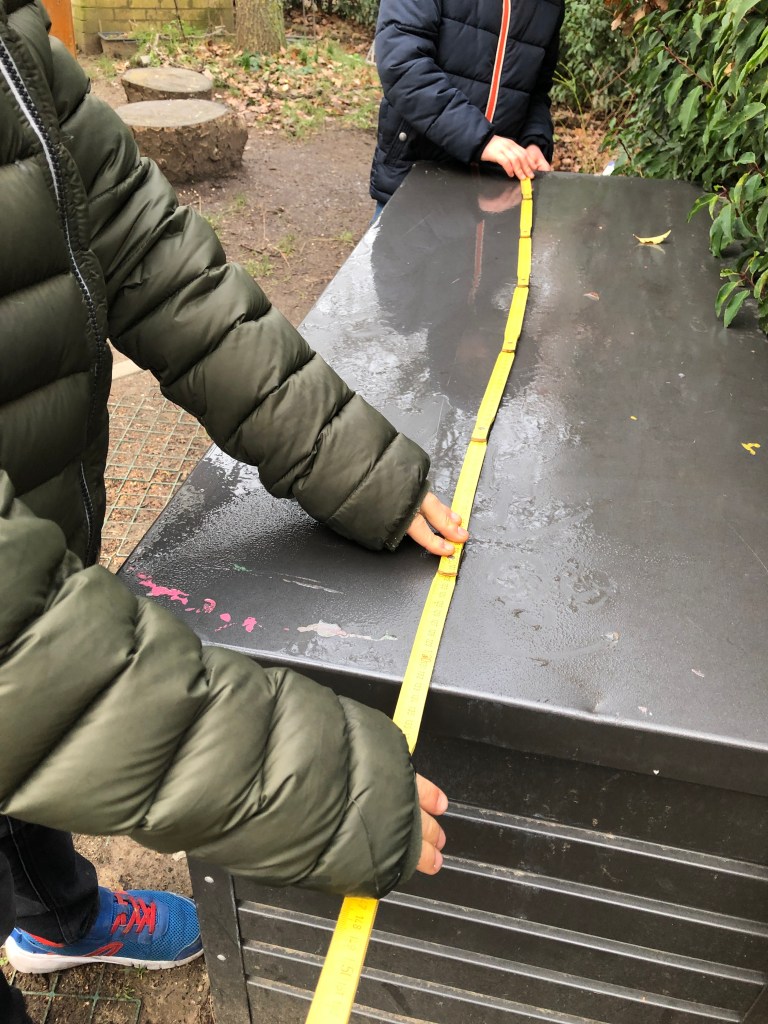
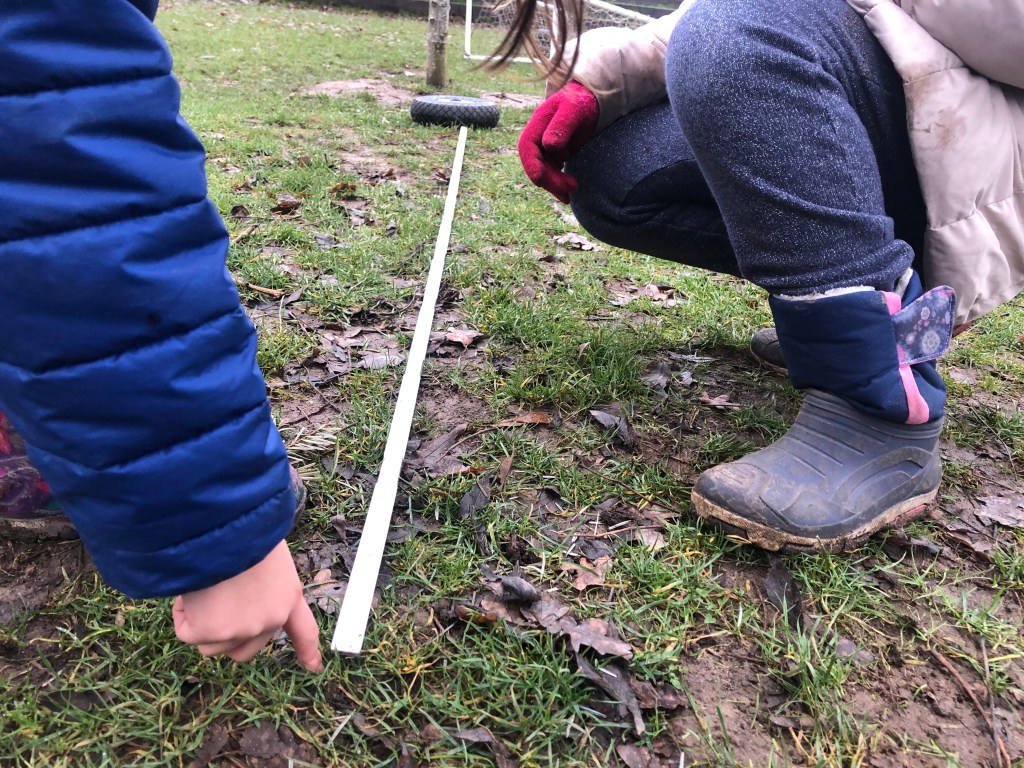
Recently, we were contacted by another international school who are in the process of developing their outdoor learning space. They wanted to know the height of our tables and also the size of our student-friendly rakes. What followed was a task for our 2nd grade students where they had to measure and record a variety of objects in our space. Sometimes in centimetres, sometimes metres and sometimes a mixture of the two. Everything was measured, from the height of bushes to the length and width of our entire space. Some students even moved onto finding the perimeter of the planters in our vegetable garden. It’s safe to say that the inquiring international school received slightly more information back than they asked for. In summary, find a task that has an authentic purpose and see where it takes you!

Magic Number

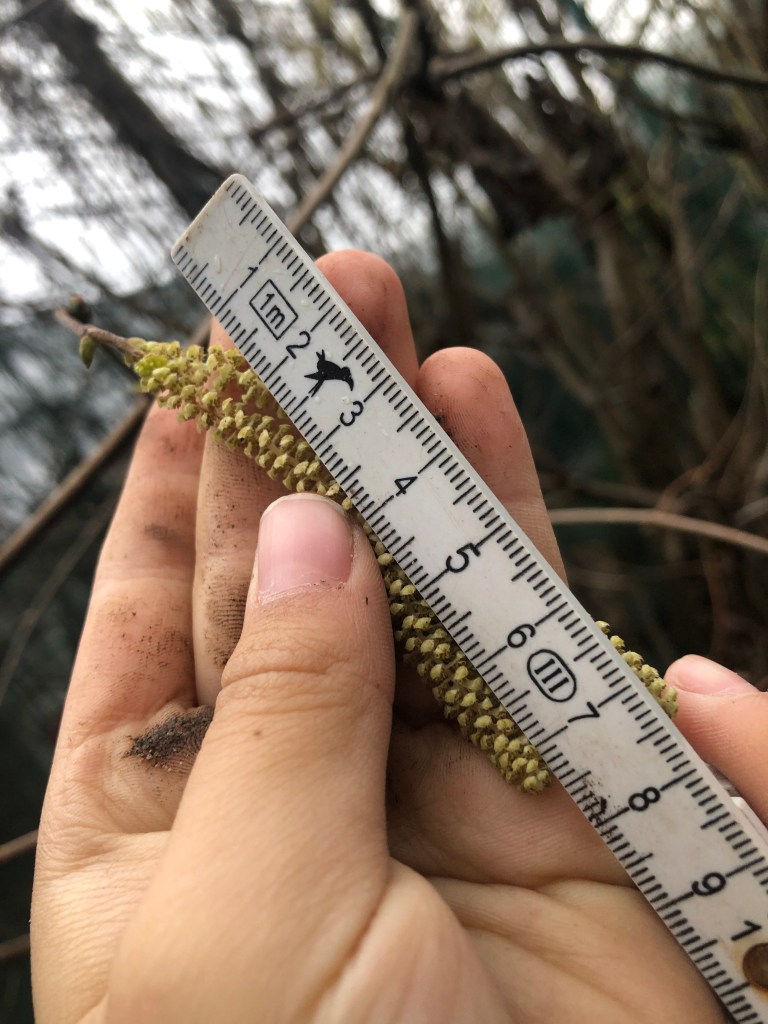
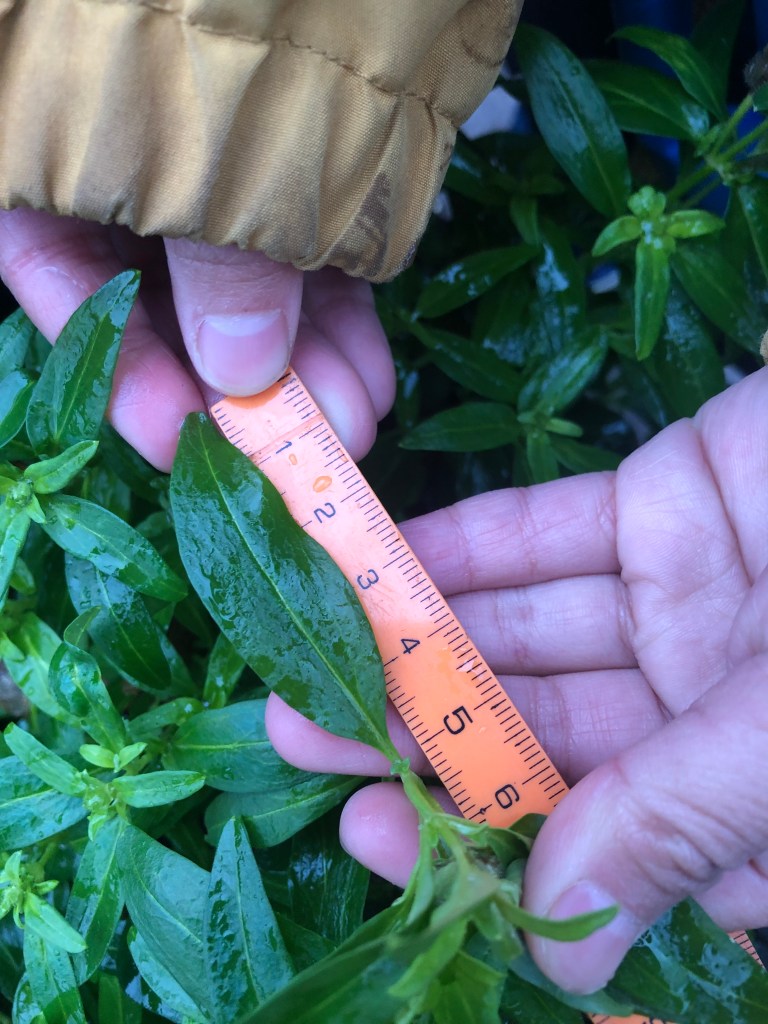
Using a thermometer in your outdoor space (insert reading scales discussion here if necessary), find the day’s temperature to the nearest degree in celsius. This is your magic number. Send your students out into the space armed with measuring tools and challenge them to find objects that are the same length in centimetres as the magic number. For example, if the day’s temperature is 7 degrees, students are looking for objects that have a dimension of 7cm. This can be a very different task depending on the season. If you’re in a country which favours fahrenheit over celsius, then it’s going to look very different again.

This activity is one of our favourites because it offers a switch around in the focus of measurement. Instead of measuring one object to find its length, students need to measure lots of objects in their search for the elusive magic number. Use it as a starter and extend it as you wish.

Plant Things

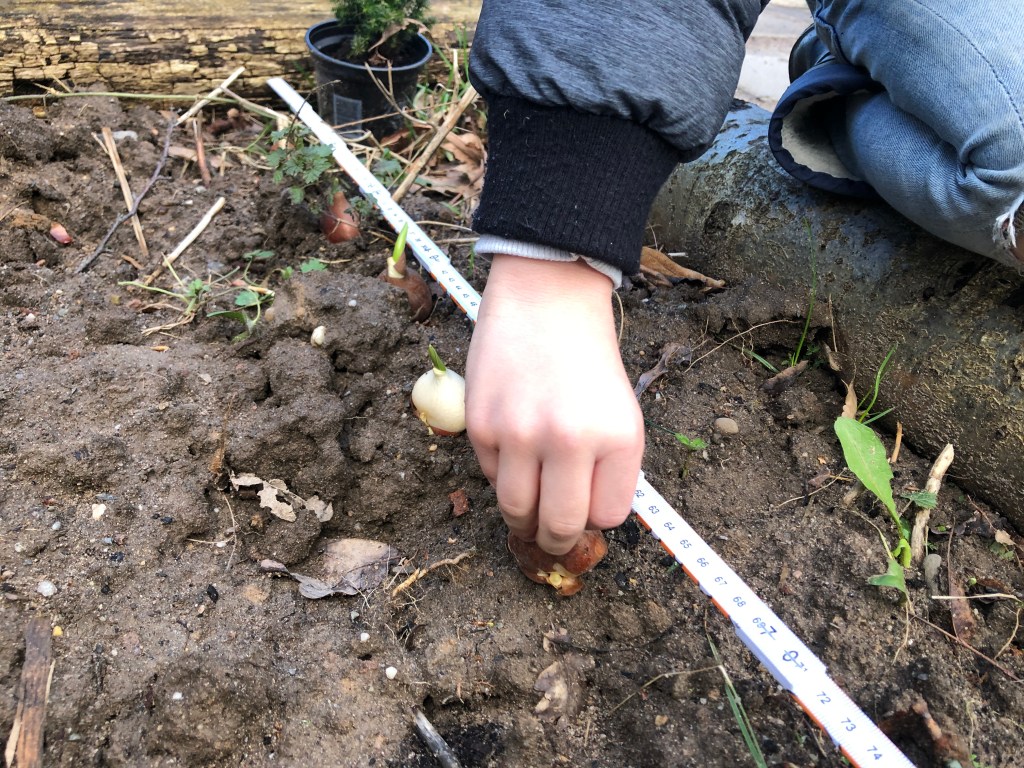
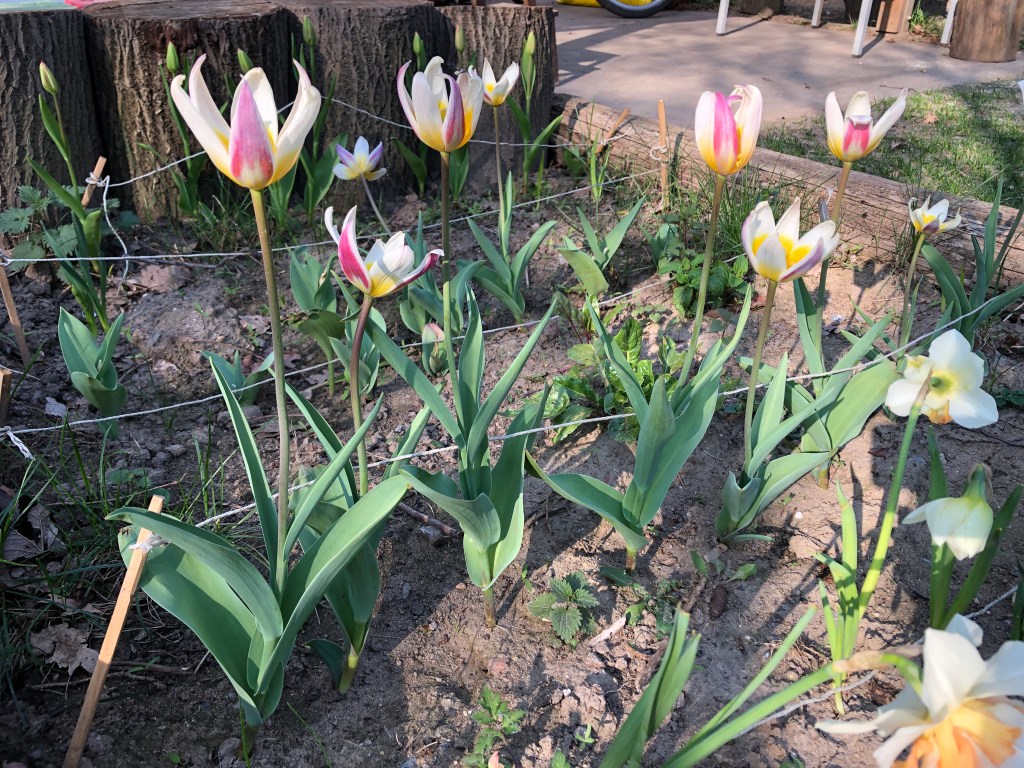
Here’s an idea for those among us who have higher OCD tendencies. Incorporate measurement into whatever you’re planting and the result can be a wonderfully ordered vegetable bed or flower garden. This year, we spaced our tulip bulbs 10cm apart. Unfortunately, with all of our students being at home during Covid-19 lockdown, the closest they got to their beautifully spaced flowers was seeing a picture of them!

Measuring can also come into play when comparing the height of growth. This came in particularly handy during the aforementioned lockdown. Those of you who read the blog post about our Home Learning a couple of weeks ago will know that we sent bean seeds home when everything kicked off a couple of months. Keeping track of growth and comparing this during our ZOOM meetings has been part of our Home Learning process.

Get Your Game Face on

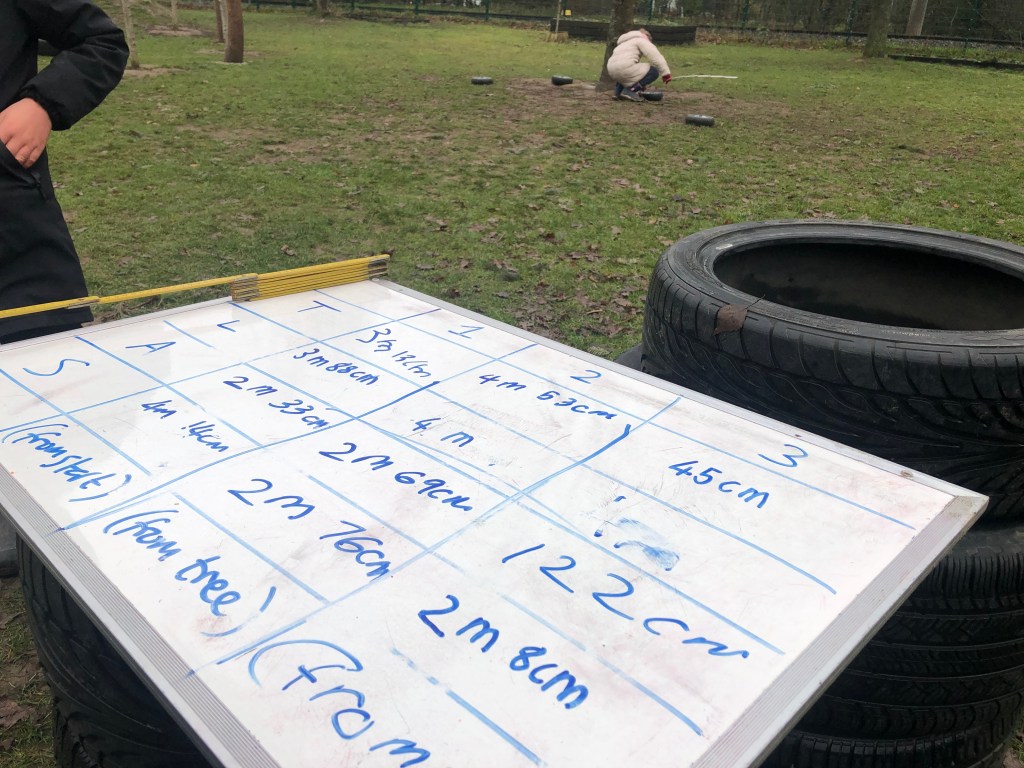
In a similar way to making projects, measurement can be found in a whole host of different games. We have some tyres lying around as loose parts which we use to play a boules-type game. Standing behind a start line, players throw or roll their tyre to try and make it finish closest to the jack or marker. The measurement aspect comes in when it’s too close to call. This can be a good opportunity to discuss standard versus non-standard units. If you’re going to wind students up by suggesting that certain players are “false measuring” to try and win, be sure to appoint a referee whose decision is final. This is a great technique to encourage accuracy, checking and rechecking measurements.


So there you have it, six ways to incorporate measurement into your outdoor space. The bottom line is that measurement can be found in almost anything you’re doing, so just be aware and don’t miss the learning opportunities! And if you do miss them, give yourself a break and catch them next time! Stay safe and stay healthy.