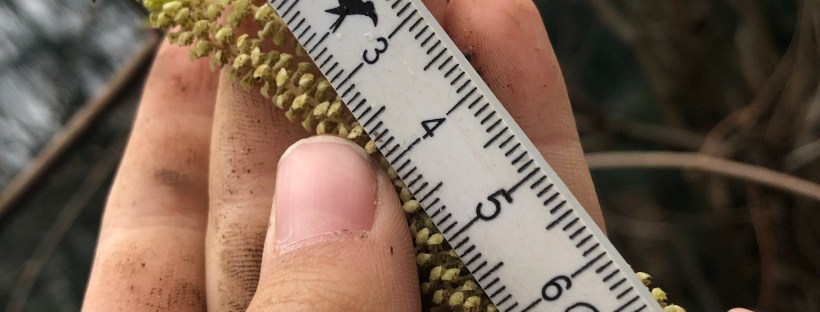
If We Chop Down This Tree, Will We Kill Our Librarian? Authentic Opportunities For Taking Measurement Outdoors

I think I can count on one hand the number of times that, as an adult, I have needed to measure a shape that is printed on a piece of paper. Research tells us that authentic learning experiences are the way forward. It suggests that enabling learners to put their skills and knowledge to practical use in a situation where the outcome has a tangible relevance to their own lives, results in far greater retention of knowledge. It’s time to get authentic with measurement. Don’t panic! The great news is that out of all of the ways to learn mathematical concepts in an outdoor environment, measurement is one of the easiest places to start. Here are six ways, which can be adapted to suit your setting, for taking measurement outdoors in an authentic way. 

Pose a Problem
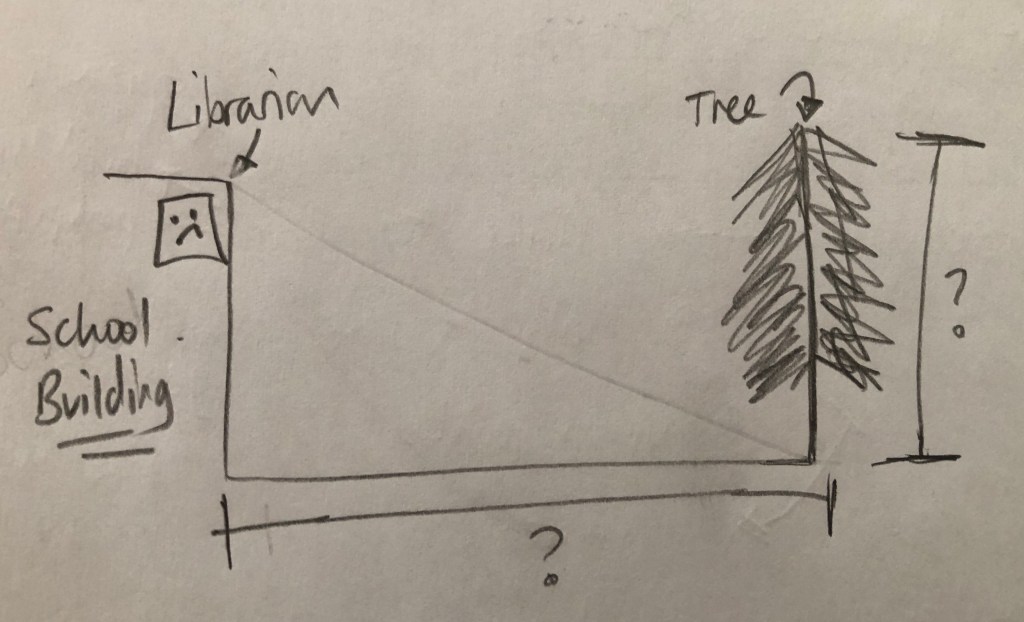
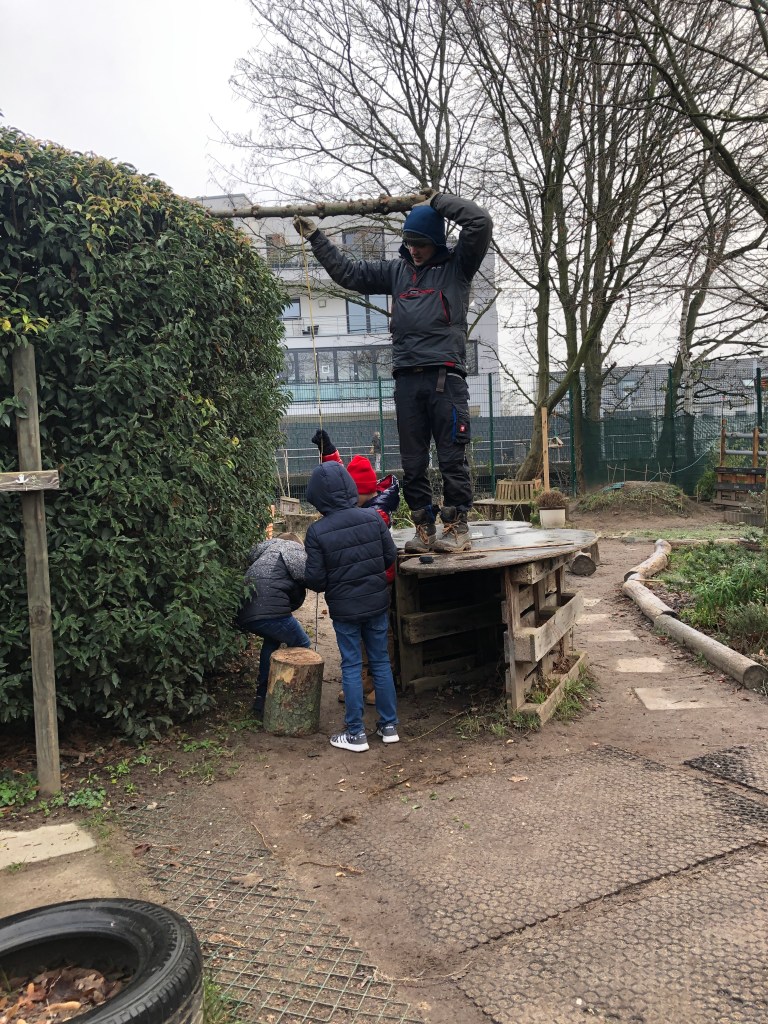
If we chop down this tree, will we kill our librarian? What do we need to calculate to make sure that Mr Crouch will be ok? Hopefully, the students will figure out that they need to measure the height of the tree and also the distance between the school building and the base of the tree. You can then use “10 ways to measure a tree” from OutdoorClassroomDay.org.uk to help you calculate your librarian’s life expectancy. With older students, and if you really want to really get into it, you could bring in some trigonometry and have the conversation about how the top of the school building is further away than the base because the hypotenuse of the triangle is longer than its base… blah, blah, maths, maths.

No librarians were harmed in the writing of this blog.

Make Stuff
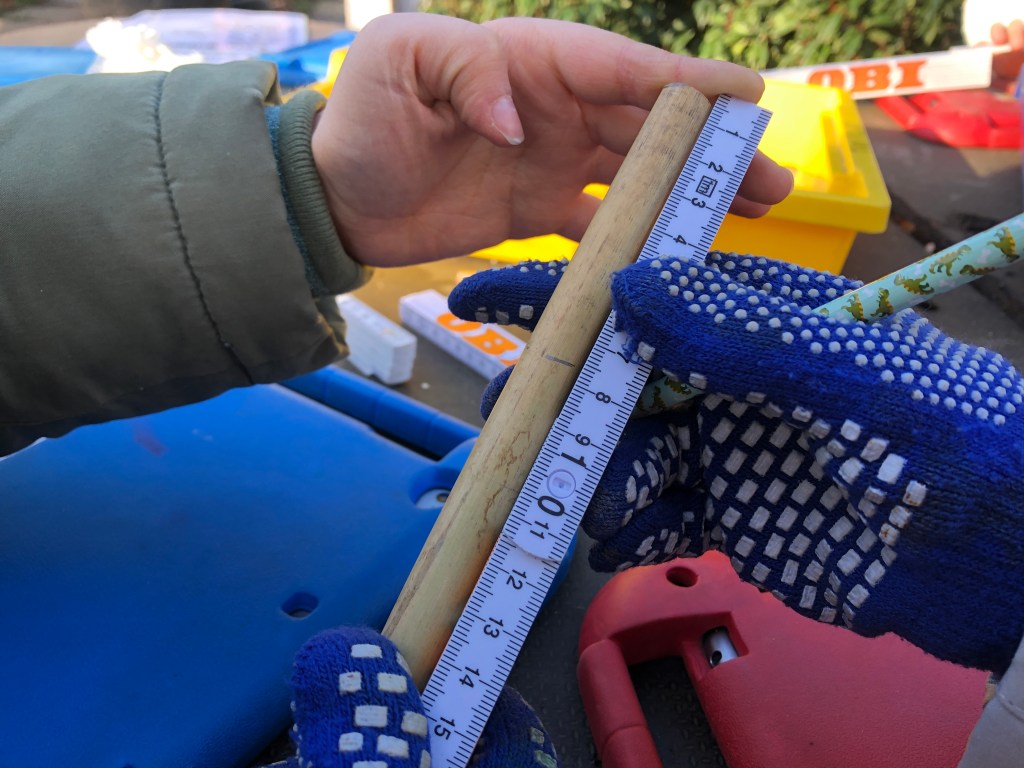
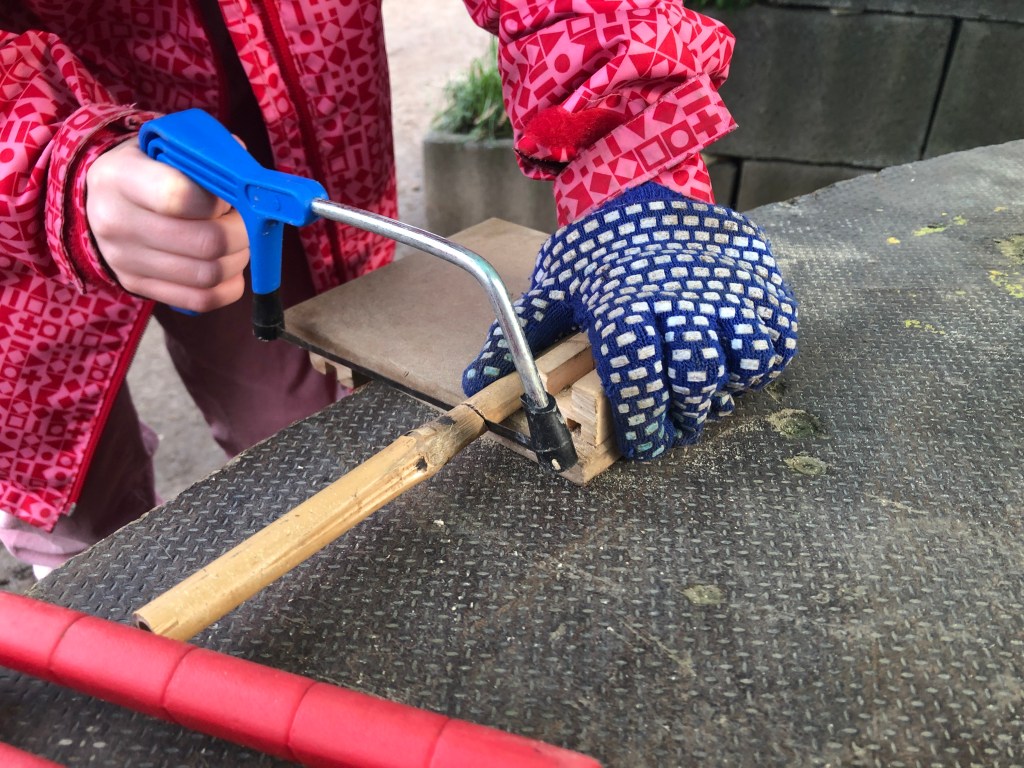
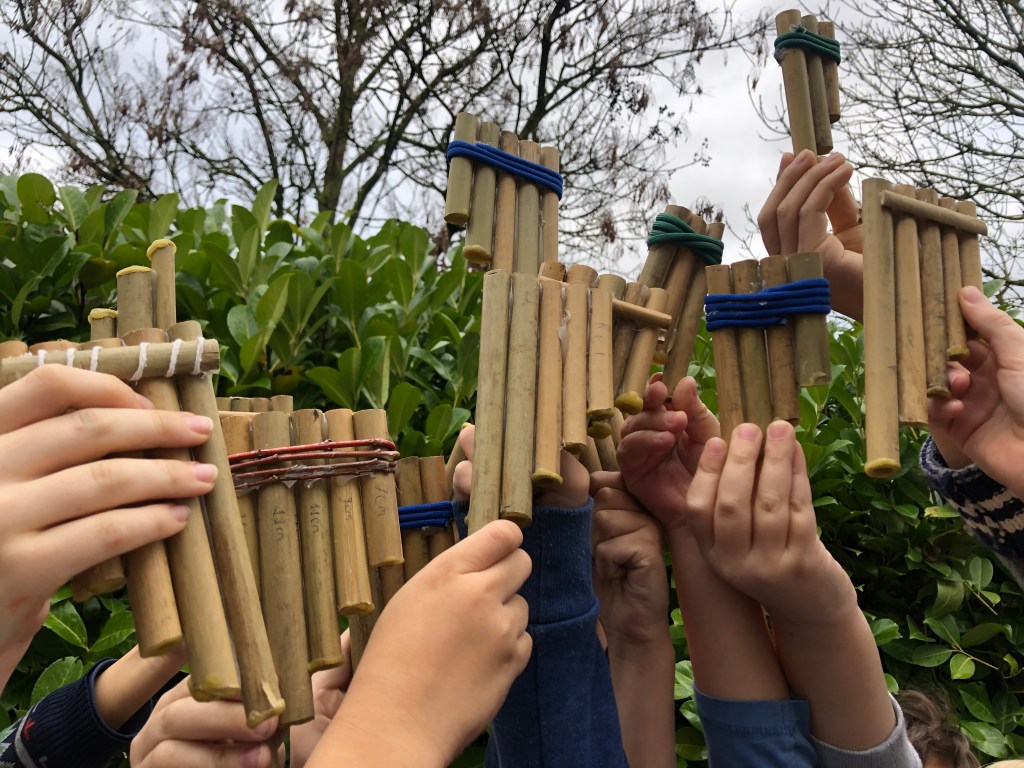
Not many things give students more motivation to improve their measuring accuracy than having a hands-on project to work on. From bamboo panpipes and birdhouses to wooden spinners and raised beds. It doesn’t really matter what you create as long as you prepare yourself to make the most of the activity through the lens of measurement. Using the phrase “measure twice, cut once” is useful when encouraging students to focus on their accuracy.

Find a Purpose
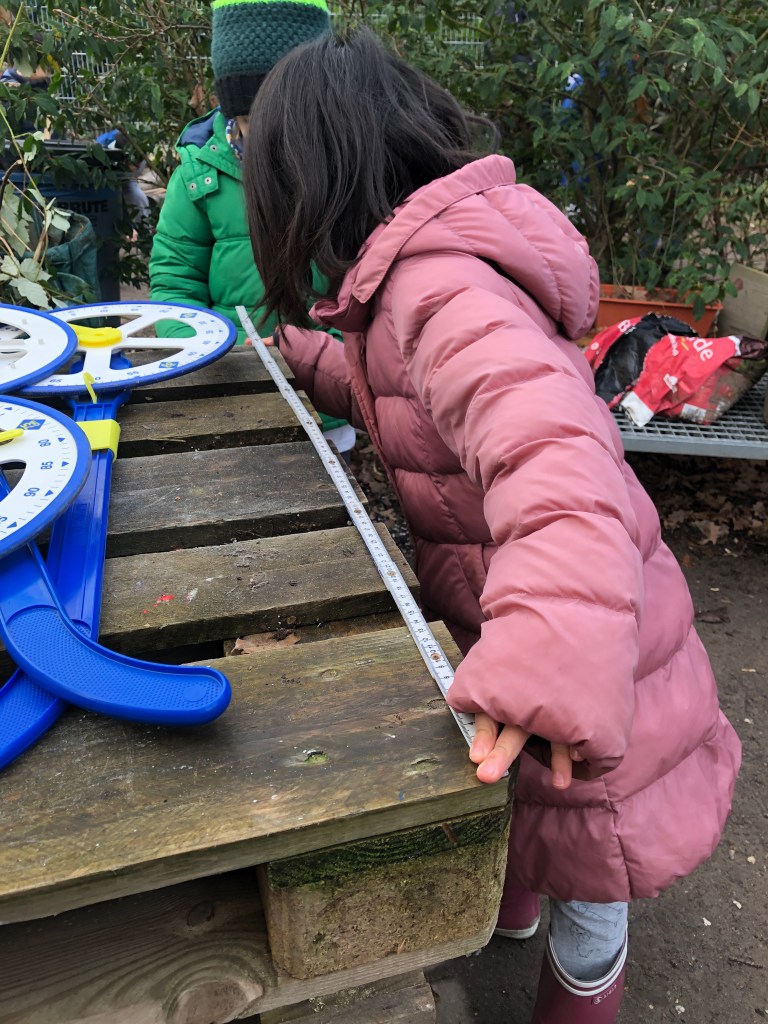
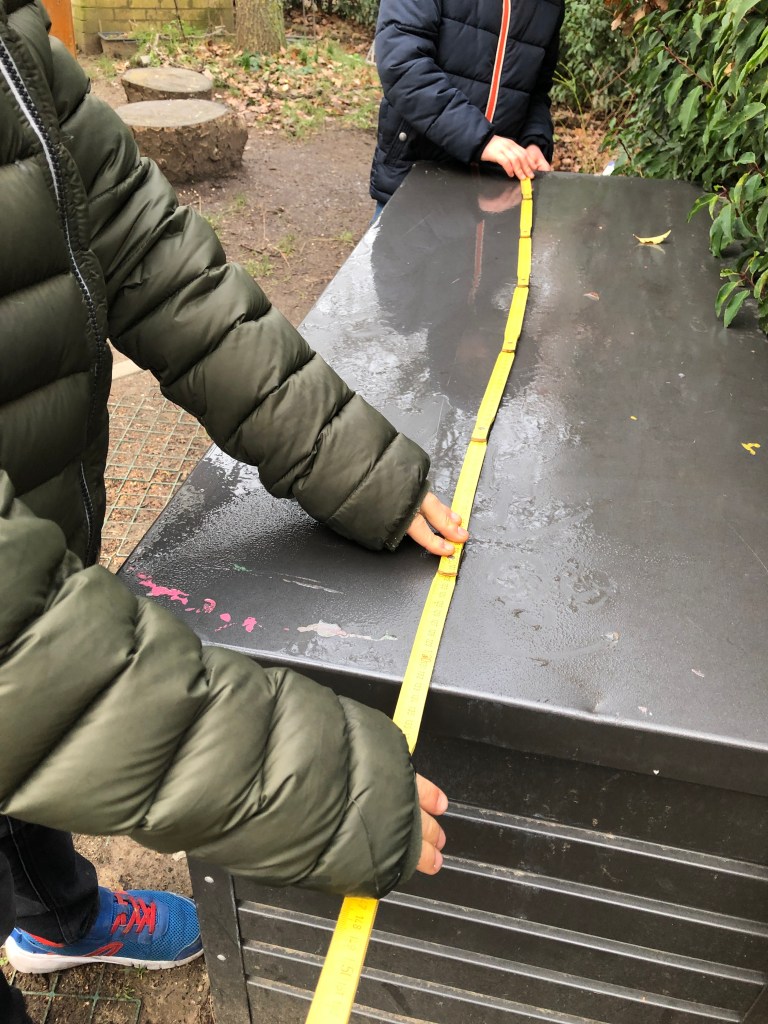
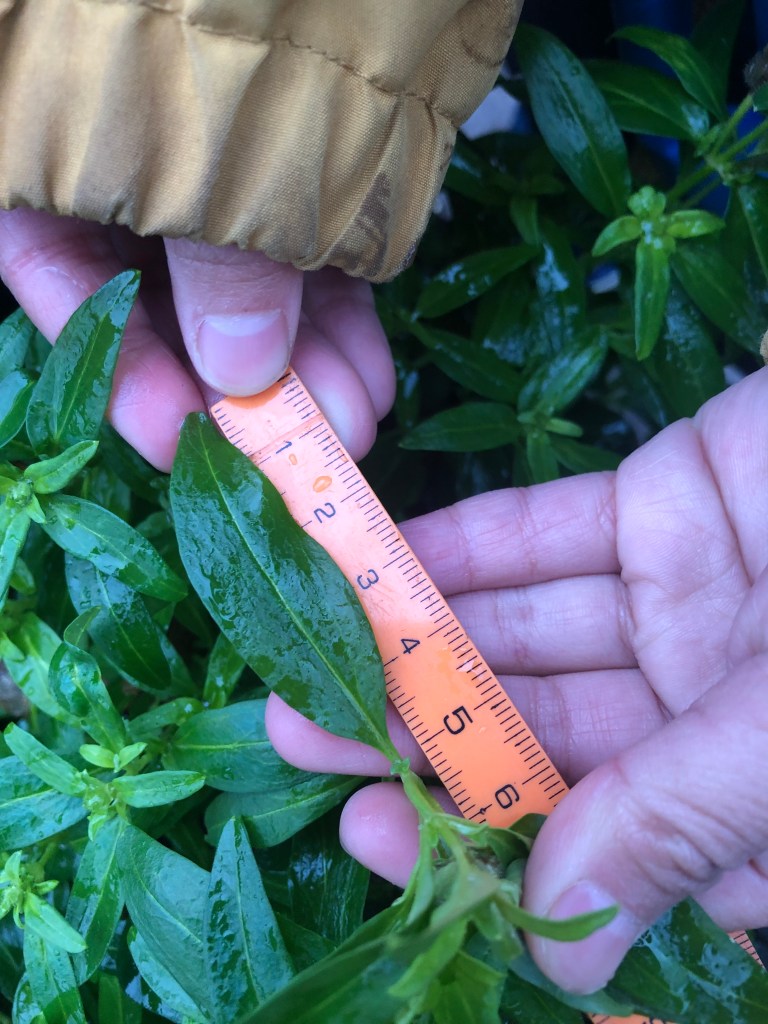
Recently, we were contacted by another international school who are in the process of developing their outdoor learning space. They wanted to know the height of our tables and also the size of our student-friendly rakes. What followed was a task for our 2nd grade students where they had to measure and record a variety of objects in our space. Sometimes in centimetres, sometimes metres and sometimes a mixture of the two. Everything was measured, from the height of bushes to the length and width of our entire space. Some students even moved onto finding the perimeter of the planters in our vegetable garden. It’s safe to say that the inquiring international school received slightly more information back than they asked for. In summary, find a task that has an authentic purpose and see where it takes you!

Magic Number
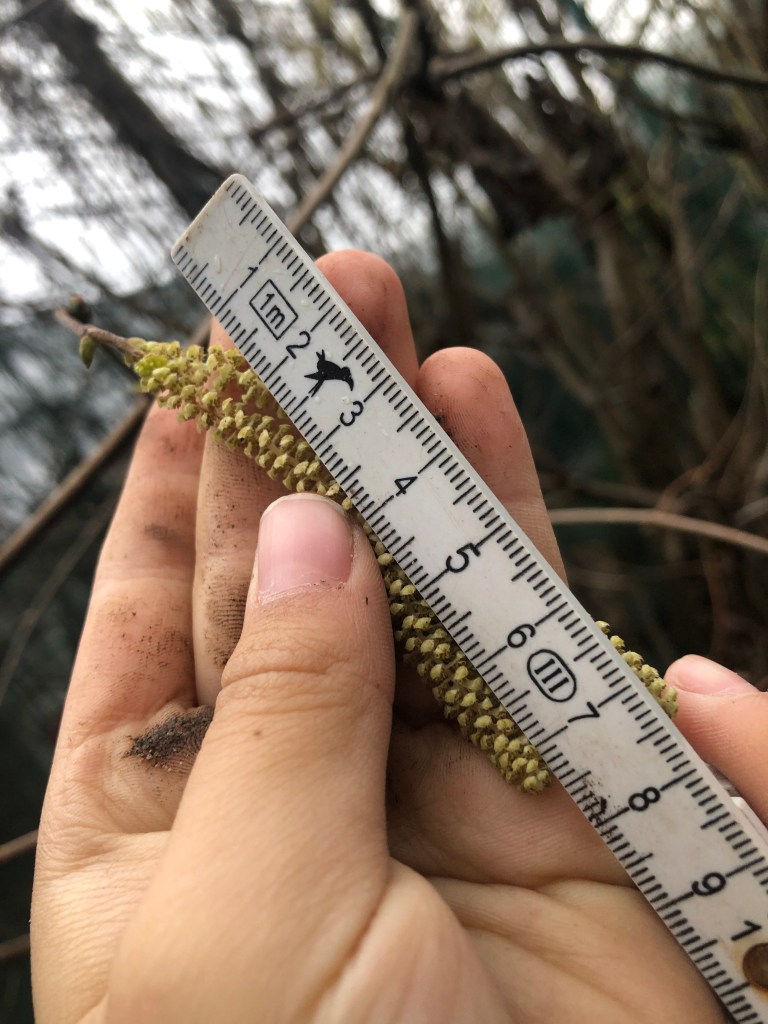
Using a thermometer in your outdoor space (insert reading scales discussion here if necessary), find the day’s temperature to the nearest degree in celsius. This is your magic number. Send your students out into the space armed with measuring tools and challenge them to find objects that are the same length in centimetres as the magic number. For example, if the day’s temperature is 7 degrees, students are looking for objects that have a dimension of 7cm. This can be a very different task depending on the season. If you’re in a country which favours fahrenheit over celsius, then it’s going to look very different again.

This activity is one of our favourites because it offers a switch around in the focus of measurement. Instead of measuring one object to find its length, students need to measure lots of objects in their search for the elusive magic number. Use it as a starter and extend it as you wish.

Plant Things
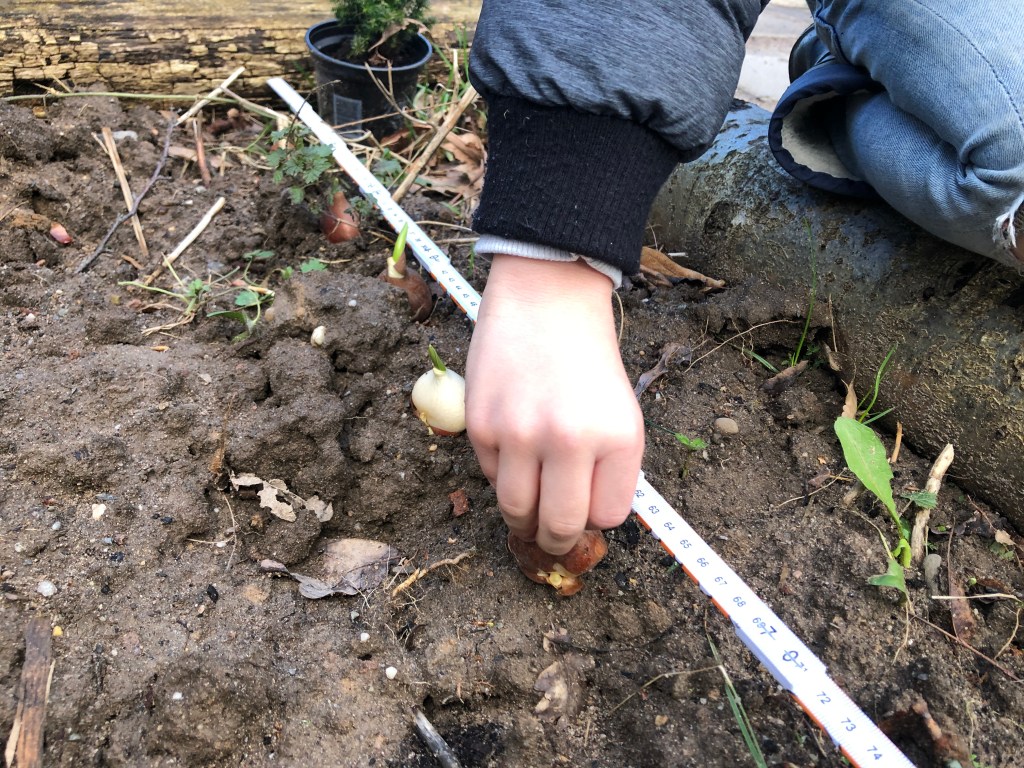
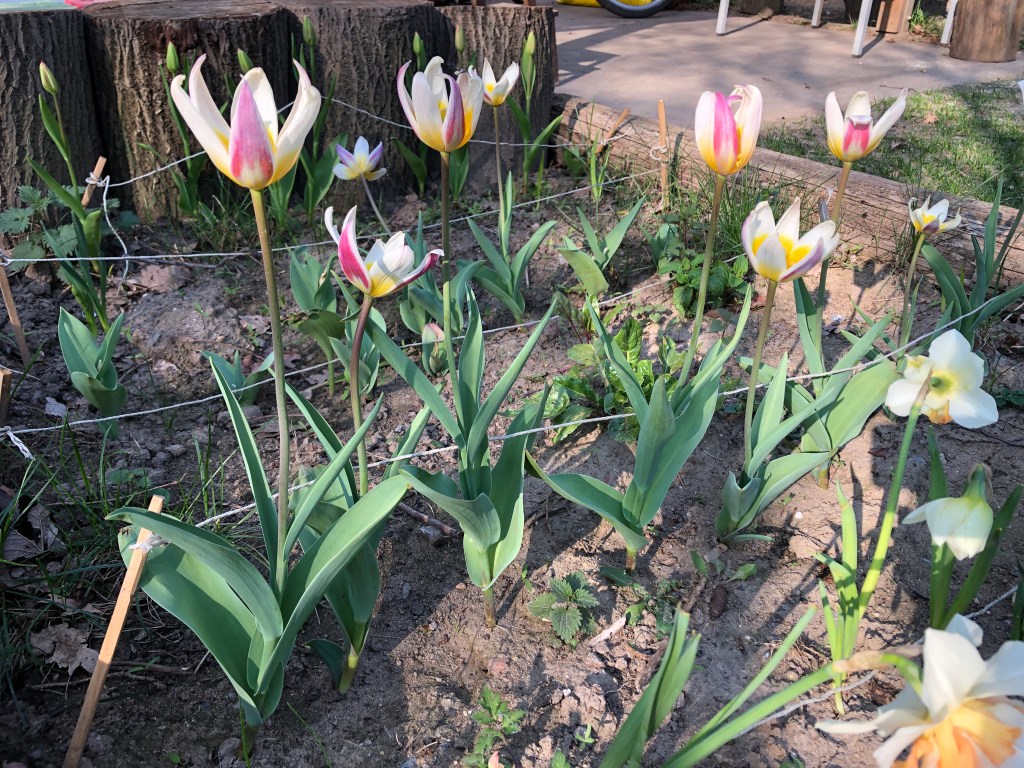
Here’s an idea for those among us who have higher OCD tendencies. Incorporate measurement into whatever you’re planting and the result can be a wonderfully ordered vegetable bed or flower garden. This year, we spaced our tulip bulbs 10cm apart. Unfortunately, with all of our students being at home during Covid-19 lockdown, the closest they got to their beautifully spaced flowers was seeing a picture of them!

Measuring can also come into play when comparing the height of growth. This came in particularly handy during the aforementioned lockdown. Those of you who read the blog post about our Home Learning a couple of weeks ago will know that we sent bean seeds home when everything kicked off a couple of months. Keeping track of growth and comparing this during our ZOOM meetings has been part of our Home Learning process.

Get Your Game Face on
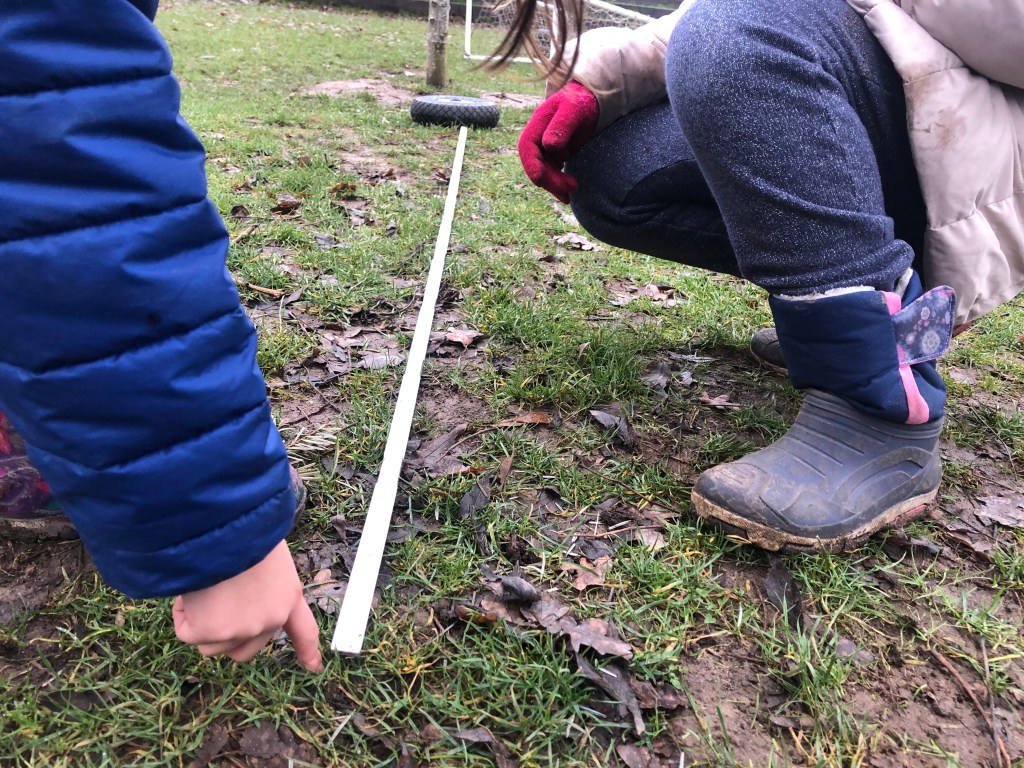
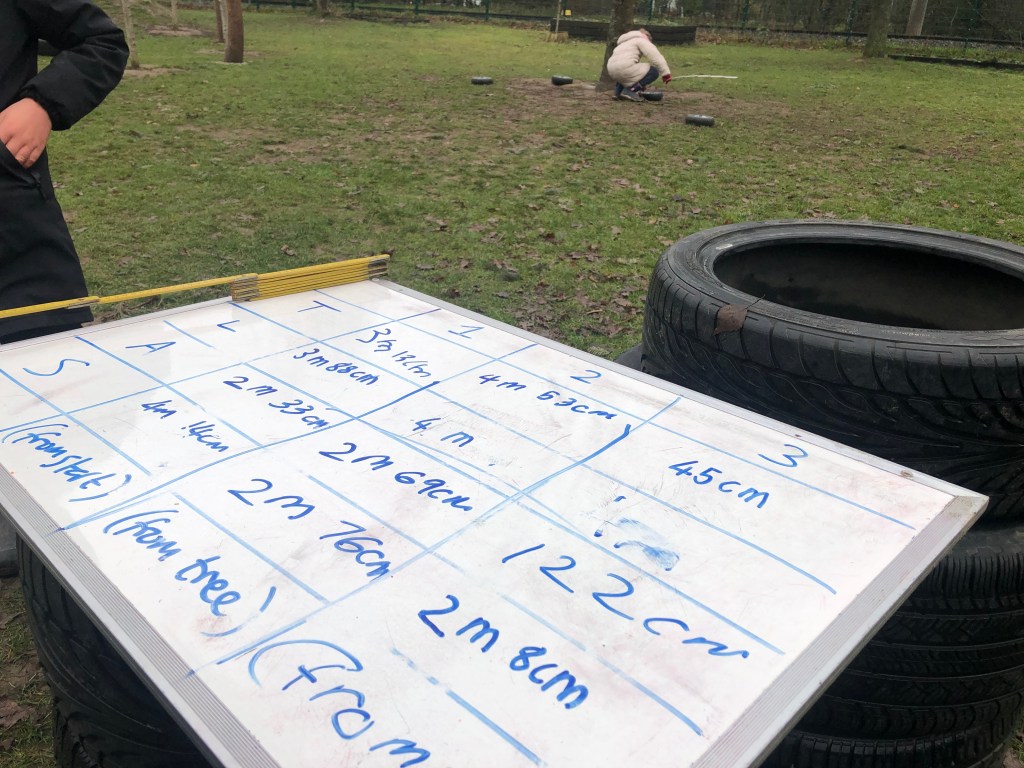
In a similar way to making projects, measurement can be found in a whole host of different games. We have some tyres lying around as loose parts which we use to play a boules-type game. Standing behind a start line, players throw or roll their tyre to try and make it finish closest to the jack or marker. The measurement aspect comes in when it’s too close to call. This can be a good opportunity to discuss standard versus non-standard units. If you’re going to wind students up by suggesting that certain players are “false measuring” to try and win, be sure to appoint a referee whose decision is final. This is a great technique to encourage accuracy, checking and rechecking measurements.


So there you have it, six ways to incorporate measurement into your outdoor space. The bottom line is that measurement can be found in almost anything you’re doing, so just be aware and don’t miss the learning opportunities! And if you do miss them, give yourself a break and catch them next time! Stay safe and stay healthy.
A Week with The Three Little Pigs: Five Lesson Ideas for Taking a Story Outdoors

World Book Day is back on Thursday 5th March! Following on from our Supercharged Storytelling blog, this week we are sharing a progression of five lessons to take the well known story of The Three Little Pigs outside. We followed this progression with our Grade 1 students over five days, with a 1 hour lesson outside each day. Please feel free to use or adapt the ideas to suit your students, timescale, and stories that you are exploring!


Lesson 1: Introduction to the story

Focus: Sequencing and settings

To encourage children to make connections between stories, I start each story with a provocation, where I place objects on a mat and invite them to share ideas of which stories the objects could connect to. This prompts children to use critical thinking skills and enables me to assess their prior knowledge of each story. 

A screenshot of a student’s Book Creator page

As this was our first story that we explored together, the provocation was very simple and our focus story was quickly identified. I then shared a very simple version of the story which highlighted each event with limited detail. This sparked conversations about different versions that children had heard and how stories change as people tell them throughout time and place. 

Bringing the discussion back to the events and settings in our shared text, I challenged the children to create a small world map of The Three Little Pigs. Using natural materials, the children built the setting in sequential order. As they built the houses, I questioned how the pigs would get from A to B and what would they see along the way, encouraging children to add details like a path or a forest etc. 

I also placed a basket of pre-made character stones on the resource table which some children decided to add into their settings or used to retell the story. 

At the end of the lesson, we looked at each small world map and made comparisons between the text and the children’s visual representations of it. 


Lesson 2: The Wolf is in town! 

Focus: Problem solving, Connecting with stories

After exploring the story from the outside looking in, I wanted to bring the story to life and encourage the children to step inside the fictional world of the Three Little Pigs. Arriving in the garden, we found a letter attached to our whiteboard addressed to Grade 1 with an urgent request to ‘please read!’ With excitement and confusion, we opened the letter and read the contents together. Now, let me warn you, your response to this is key in enabling children to engage their imagination and suspend belief. Olivia Colman, move over because the best actress award for 2020 goes to…! 

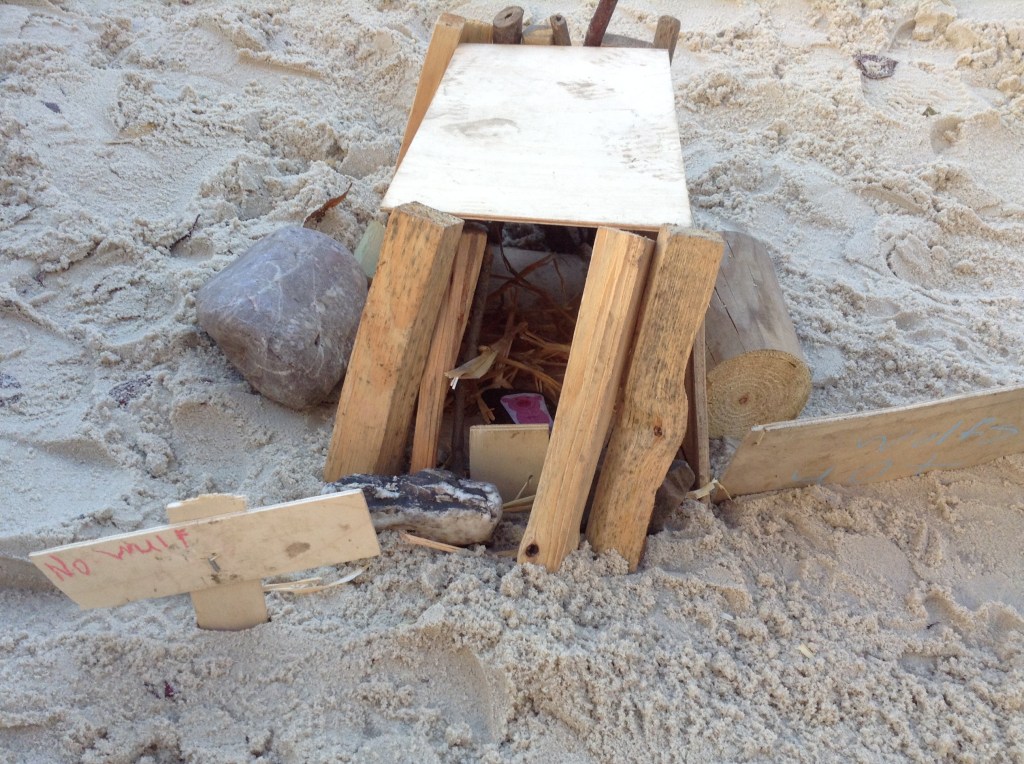
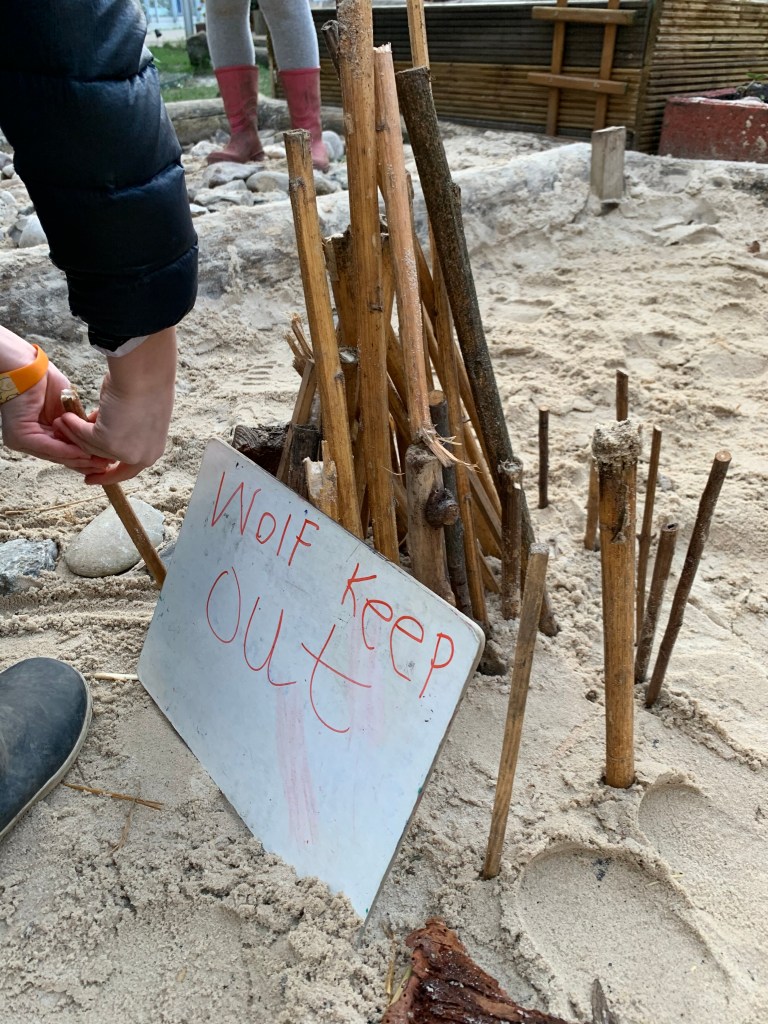
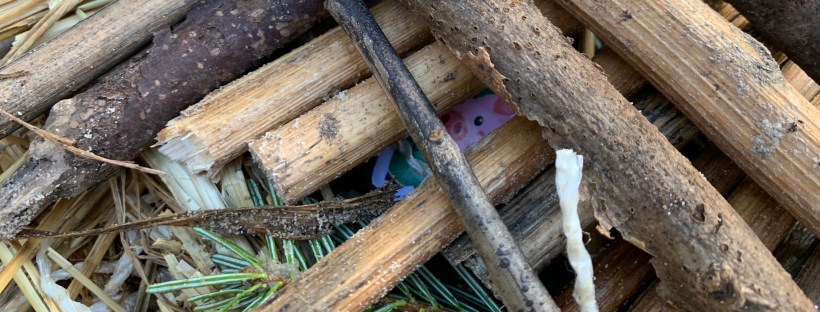
On the back of the envelope, I had written a predicted time of the wolf’s arrival. This set our time limit for building wolf proof homes for the Three Little Pigs. Children self selected small groups to work in and each group was given a Pig character stone to build a house for (this limited the size of their projects and therefore the amount of materials each group would need). With half an hour before the wolf arrived children set to, selecting materials from the story (straw, sticks and bricks) to build with. Working together, children talked about the story and problem solved ways of wolf proofing their homes, adding signs and chimney traps to defend their properties. 

Once each group was finished building, we tested the stability of the houses by reenacting the wolf huffing and puffing, and blowing all together to see if we could blow them down. In past years, this has been our final test which is great fun and ends with many successful wolf proof homes still standing. However, this year we wanted more excitement so we invited our school gardener, complete with wolf mask and leaf blower to pay us a visit. 

The lesson ended with shrieks of excitement, laughter and pleads for the wolf to return EVERY DAY!


Lesson 3: What Time is it Mr Wolf? Inquiry Time!

Focus: Student led inquiry

After much excitement in our previous lesson, I wanted to allow children the opportunity to harness their enthusiasm and take their inquiry in their own direction. It was interesting to observe the way in which children engaged with the story and the characters within; some children built wolf traps, some acted the story out, and some wrote letters to the Big Bad Wolf. 

At the end of the lesson, we reflected on the ways in which we had chosen to connect with the story and left the garden filled with a sense of wonder. 


Lesson 4: Cross Curricular Links 

Focus: Measurement 

Running alongside our storytelling unit is our measurement strand. Using stories as a springboard for mathematical inquiries adds purpose and value to children’s learning. After checking our wolf traps and finding a letter announcing the wolf’s absence for a few days, we sighed with a mixture of relief and disappointment and redirected our focus for the lesson. Measurement. 

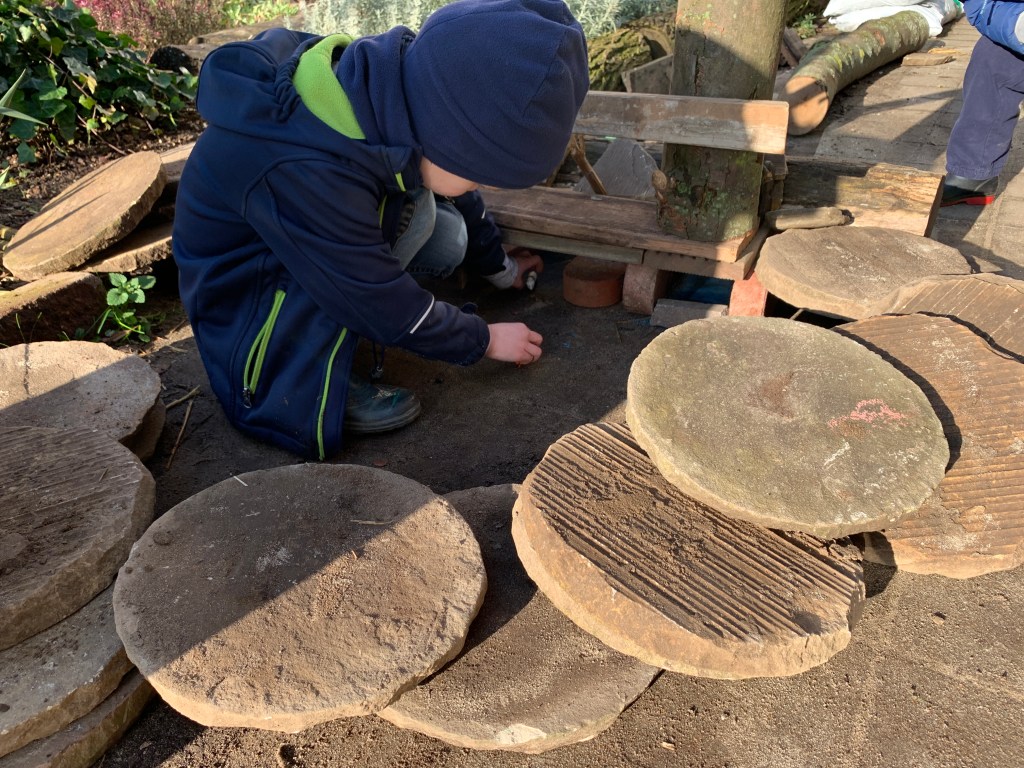
Having drawn out the settings of the story on the pavement with chalk, the children enjoyed following the path around the story. After a few minutes of running chaotically around the settings, we regrouped and I posed the question; “How far did the Big Bad wolf walk?” Together, we asked how many steps did he take from the first Little Pig’s house to the next? Having previously discovered that we all take different sized steps we agreed that we would need to use a standardised measure to ensure we all got the same answers. Using a 30cm ruler, we decided that each ruler length would be one step, therefore 10 rulers, would be 10 wolf steps. 

A Book Creator page that the children can add photos to, write on, and make voice recordings

Using the template above, the children worked in partners to follow the wolf’s journey to calculate how many steps he took from each place to the next. Top tip: having done a similar measurement activity previously, we found that measuring the distances ourselves first and making the children check in after each calculation enabled us to assess quickly which children required more support and allowed the children to check and correct their calculations throughout the lesson. 

Extension task: For those who finished early, we asked them to calculate how many steps the wolf took in total. Depending on age and ability of your students you could extend the task further by asking questions such as; if the first Little Pig takes 2 steps for every 1 wolf step, how many steps did the Little Pig run from his house to the second Little Pig’s house etc. You could also measure in standardised units of measurement to get exact answers in M and CM. 


Lesson 5: The True Story of The Three Little Pigs 

Focus: Storytelling

Since our first conversation about differing versions of the story, we combed the school library and were pleasantly surprised by the many creative tales of the three little pink porkers. In lesson 3 we read another, more detailed version of the story before splitting off for inquiry time and I placed the other books in our treasure chest for children to leaf through at their leisure. On the last day, I shared the version entitled; The True Story of The Three Little Pigs written by Jon Scieszka (Aff Link). After a week of wolf trap building, it was interesting to observe the children’s reactions to the tale that portrayed the wolf as a misunderstood neighbour who just wanted a cup of sugar! Telling the story from a different perspective generated a heated debate over which version was true and led to our final activities. 

Together we created a simple bar chart on the ground to display which story each child enjoyed most. I drew the axis with chalk and the children placed a character stone in their favourite column. This was a quick and powerful visual representation, that demonstrated how we connect differently to stories. 

After reflecting on this, the children were asked to form groups to tell what they believed was the ‘True Story’. I explained that it could be one of the versions already told, or perhaps they had their own idea of what really happened. Children were free to choose how they would tell their story, either using character stones and building small world settings or acting as the characters themselves and using the garden as a backdrop to their tale. 

Ending the week with an open activity allowed for children to self differentiate. Some children  chose to reenact the story directly, imitating characters sayings and story language whilst others created magical tales with added characters and extraordinary events. 

We left time at the end of the lesson to share our tales and celebrate the ways in which we had grown as storytellers.


So there you have it, our week of exploring just one story outside. Use this as you like and please comment below if you have any ideas of storytelling activities that have worked well for you outside!